Professional Tree Trimming for Aesthetics: A Practical Guide
Last Updated: November 19, 2026
Quick Summary
Professional tree trimming for aesthetics shapes a tree’s visible form so it looks balanced and in proportion with the property, while supporting its structure and health. Good work keeps a natural shape and avoids heavy reduction, which weakens trees and triggers dense regrowth.
- Remove only a modest share of the canopy in a single visit to avoid stressing the tree.
- Prune flowering trees straight after flowering so you do not cut off the coming display.
- Most conifers will not regrow from old bare wood, so shape them lightly and often with tip cuts.
- Avoid topping, which leaves dense, weak regrowth and a structurally weaker tree each year.
- Judge a finished job by natural form, canopy balance, clean cut placement and enough retained foliage.
Table of Contents
- What Aesthetic Tree Trimming Actually Achieves
- Tree Trimming Versus Tree Pruning: Knowing the Difference
- Ornamental Tree Pruning by Species and Growth Habit
- Tree Shaping Techniques Compared
- Canopy Thinning and Crown Lifting: When Each Fits
- Timing, Over-Pruning Risks and How to Judge Quality
- Booking Your Aesthetic Trim: What to Ask and Next Steps
- Frequently Asked Questions
What Aesthetic Tree Trimming Actually Achieves
Professional tree trimming for aesthetics shapes a tree’s visible form so it looks balanced, tidy and in proportion with the property around it. Done well, it also supports the tree’s structure and general health. Done badly, it can leave scars, stimulate weak regrowth and shorten a tree’s life.
Most homeowners want two things from a trim: a tree that looks right from the street and from the back deck, and one that stays safe over the years.
The practical results of good aesthetic work include:
- A more even crown with better light reaching the lawn and garden beds
- Fewer branches rubbing or crossing, which reduces wounds and entry points for disease
- Removal of deadwood before it falls onto a path, fence or car
- A shape that suits the tree’s species rather than an artificial box or ball
Aesthetic pruning is not the same as heavy reduction. Removing a large share of the canopy in one visit usually weakens the tree and produces dense, fast regrowth that looks worse within a season.
Tree Trimming Versus Tree Pruning: Knowing the Difference
The two terms are often used interchangeably, but they describe different intentions. Within professional tree trimming for aesthetics, trimming generally refers to light, regular work that keeps a tree or hedge within bounds. Pruning is a more deliberate set of cuts that removes specific branches to improve health, structure or form.
For aesthetic goals, you usually need both. Trimming keeps the outline tidy between visits. Pruning addresses the structural problems that trimming alone cannot fix, such as co-dominant leaders, branches growing toward the house or a crown that has become lopsided after storm damage.
A useful rule is to ask what the cut is for. If it shortens growth to hold a shape, it is trimming. If it removes a whole branch back to its point of origin to open the canopy or correct structure, it is pruning.
Ornamental Tree Pruning by Species and Growth Habit
Ornamental trees do not all respond the same way to cutting, and the single biggest factor in whether a result looks natural is whether the work matches the species and its natural growth habit. Two trees of similar size on the same street can need completely different treatment.
Flowering ornamentals. Many flowering trees set buds on the previous season’s wood, so pruning them in late winter or early spring can remove the flowers you were hoping to see. Pruning straight after flowering lets the tree set new wood through the rest of the season.
Conifers. Most conifers will not regrow from old, bare wood. Cutting a spruce or pine back into the brown interior usually leaves a permanent gap rather than stimulating new growth.
Columnar and upright forms. Trees with a narrow, upright habit, think of the fastigiate forms used for screening and avenue planting, carry their character in that vertical line.
Spreading and broad-crowned species. Trees with a wide, spreading canopy often become lopsided after storm damage or because they lean toward light. Selective thinning on the heavier side restores balance without flattening the crown. Removing too much from the lighter side makes the imbalance worse.
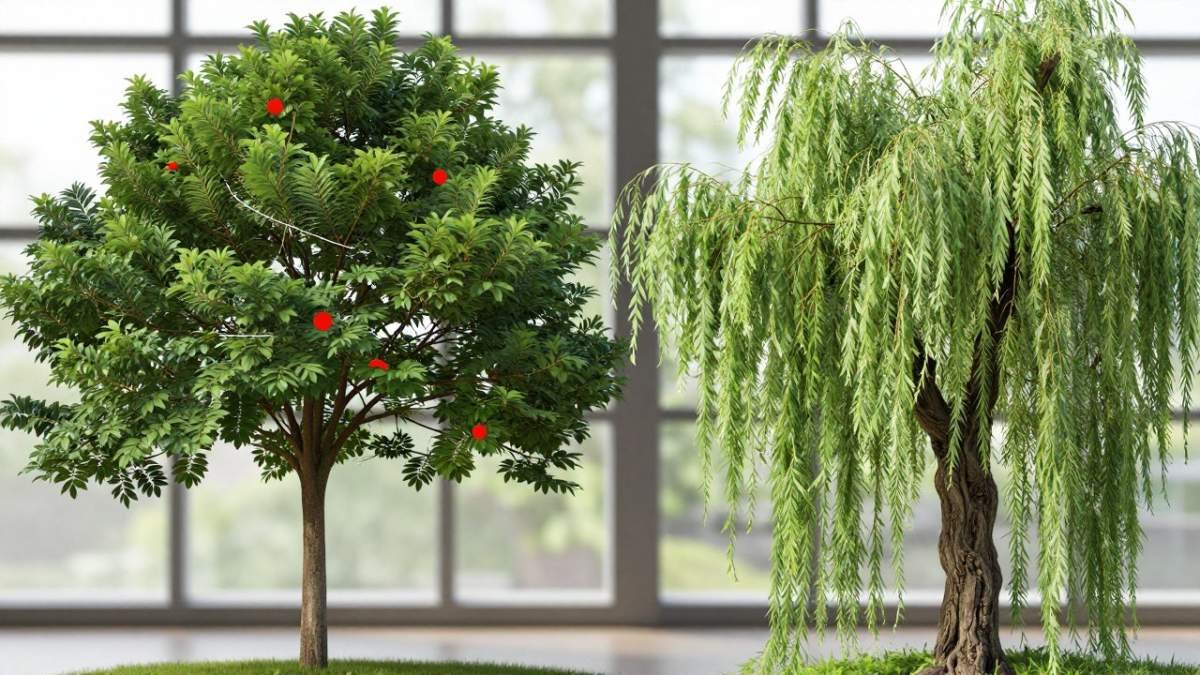
Weeping forms. Weeping trees look their best when the cascade is left largely intact. The work is usually limited to lifting the skirt clear of paths and lawns and removing dead or crossing stems inside the curtain, rather than shortening the weeping branches themselves.
Before booking, it helps to know:
- Whether the species tolerates heavy cutting or only light shaping
- Which season suits the species, since some bleed sap when cut in late winter and flowering species have narrow windows
- Whether the tree has a natural shape that should be preserved rather than corrected
- Whether the species regrows from old wood at all
Experienced arborists check species, growth habit and the tree’s history on site rather than applying one routine to every tree on the property.
Tree Shaping Techniques Compared
Several techniques achieve an aesthetic result, and each suits different trees and goals. The table below summarises the main options.
| Technique | Best For | Main Benefit | Main Drawback |
|---|---|---|---|
| Crown reduction | Trees that have outgrown their space | Shortens height and spread | Can cause dense regrowth if overdone |
| Selective thinning | Dense canopies that block light | Keeps the natural form | Takes more time and skill |
| Shaping and tip pruning | Formal hedges and clipped specimens | Precise, uniform outline | Needs regular repeats |
| Deadwooding | Any tree with dead or weak branches | Improves safety | Does little for appearance alone |
Pros and Cons of Each Approach
Crown reduction brings a tall tree down to a manageable height while keeping its general shape. The advantage is immediate relief from size. The drawback is that poorly placed cuts create weak, fast regrowth, so the work needs careful placement at the correct branch points.
Selective thinning removes whole branches in a controlled way, letting light and wind through. Trees keep their natural habit, which many homeowners prefer. It is slower and costs more in labour, and it is easy to thin too much if the arborist is not experienced.
Shaping and tip pruning gives sharp, formal lines and suits hedges, topiary and clipped specimens. The result looks neat but needs repeat visits, and the tree can become dense on the outside if the same cut is repeated every season.
Deadwooding is the least visually ambitious option, yet it often has the biggest safety payoff. Removing dead material improves the look of a tree immediately, though on its own it rarely transforms the shape.
Canopy Thinning and Crown Lifting: When Each Fits
Canopy thinning reduces the density of foliage by removing selected branches throughout the crown. It suits trees that look heavy, that shade the house or that catch wind. It should remove no more than a modest share of the canopy in a single visit, or the tree will respond badly.
Crown lifting removes the lower branches to raise the canopy above head height, clear a footpath, give a driveway room or open a view. It is a clearance task rather than a shaping one, and it works best on trees that have a clear trunk to begin with.
Use thinning when the problem is density and use lifting when the problem is clearance. Many trees need both over time, and an arborist can plan the sequence so the tree is not stressed.
Timing, Over-Pruning Risks and How to Judge Quality
Timing affects both health and appearance, and the right window depends on the species and the climate rather than on a single calendar date.
Dormant-season work. Most deciduous trees tolerate structural and aesthetic pruning best in late winter, while they are dormant and before bud burst. Cuts made then close over quickly once growth resumes in spring, and the tree’s shape is easiest to read without foliage in the way.
Flowering windows. As covered above, trees that flower on last season’s wood are usually pruned straight after flowering. Cutting them in late winter removes the coming display.
Sap bleeders. Some species, maples and birches are common examples, bleed heavily if cut in late winter and early spring when sap is rising (Maple tree pruning).
Active growth and late-season cuts. Cutting during active growth can push vigorous, untidy regrowth that spoils the shape within a season. Late-season cuts on some species leave wounds exposed to cold and slow the healing that would otherwise happen in spring.
Climate and region. In warmer parts of the country the dormant window is shorter and summer stress matters more, so heavy work is often moved to early spring or avoided during heat. In cooler areas the window is wider.
Over-pruning is the most common mistake, and it harms trees through a few clear mechanisms.
Signs of over-pruning include:
- Stripped interiors with growth only at the tips
- Flat-topped crowns with dense, upright regrowth below the cut
- Large wounds left without clean collars
- Repeated topping that leaves the tree weaker each year
- A canopy that no longer looks like the species it belongs to
Judging the quality of a finished job is easier than many people expect. Use this checklist:
- Natural form retained. The tree still reads as its species, a spreading crown still spreads, a columnar tree still rises.
- Canopy balance. The crown is even from more than one viewing angle, with no heavy side or flat face.
- Cut placement. Cuts sit just outside the branch collar, are clean rather than torn, and are not flush with the trunk.
- Retained foliage. Enough canopy remains to shade the trunk and feed the tree, rather than a thin shell of leaves at the tips.
- No stubs or flush cuts. Short stubs that will die back and flush cuts that remove the collar are both signs of rushed work.
- Clean site. Debris is cleared, and the tree has not been left with torn bark from poor rigging.
Ask the arborist to explain what they are removing and why, before and after the work. A good operator will be able to justify each major cut and will welcome the question.
Booking Your Aesthetic Trim: What to Ask and Next Steps
Before you book, ask the provider to walk the site and explain their approach for your specific trees. Useful questions include which species they are working on, what they plan to remove, how much canopy they expect to take, and how they will handle the regrowth afterwards.
Ask about insurance cover and how the work will be cleaned up, and request a written quote that describes the scope. Compare quotes on the work described, not only on the price.
If you are ready to book, get a free quote from Trees Hedge and Stump Removal and we can talk through the shape you want, the timing that suits your trees and what the job will involve.
Frequently Asked Questions
How does professional tree trimming improve a tree’s appearance?
Professional aesthetic trimming removes crossing, rubbing and poorly angled branches so the canopy has a balanced, natural outline. Cuts are made back to a suitable lateral branch or the branch collar, which keeps the tree’s natural form intact. Done well, the result looks open and uncluttered rather than hacked. A trial trim on a small section first is a sensible way to judge the arborist’s style before committing the whole tree.
What is the difference between tree trimming and tree pruning?
Trimming is generally used for shaping and tidying a tree’s outline, often to keep it within a space or improve its look. Pruning is a broader term covering removal of dead, damaged or diseased wood, structural correction and health-focused cuts. Many jobs combine both, so ask the arborist which goals the work is meant to achieve. Clear goals make it easier to judge whether the finished job has met them.
When is the best time to prune ornamental trees?
Timing depends on species and climate, but many ornamental trees in Melbourne are best pruned while they are dormant or after flowering, avoiding periods of active new growth. Heavy cuts during stressful weather or in the middle of a growth flush can invite stress and regrowth. Dead or hazardous wood can be removed at any time. Ask your arborist to confirm the right window for your specific tree before scheduling.
What should I ask before booking tree pruning services?
Ask whether the arborist holds current insurance and relevant qualifications, and what the quote includes. Request a clear description of the pruning goals and the cuts planned, plus how the tree will be assessed afterwards. Compare written quotes that describe the same scope of work, rather than just the headline price. Trees Hedge and Stump Removal can provide a written quote on request through its website.