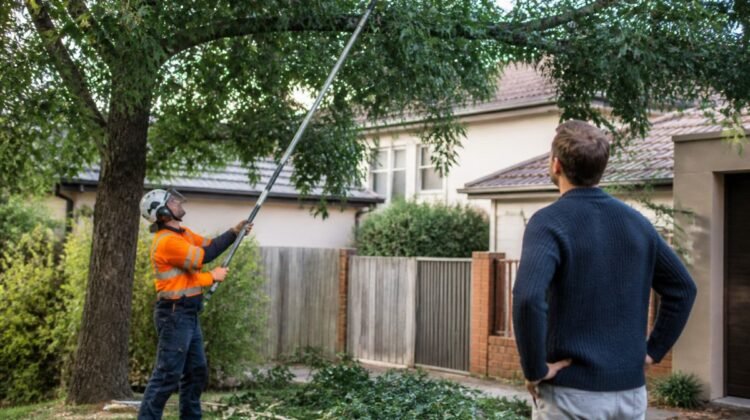
Who Is Responsible for Tree Maintenance in a Rental?
Last Updated: October 30, 2026
Quick Summary
In most Australian tenancies, the tenant handles routine garden upkeep such as watering, mowing and trimming small hedges, while the landlord is responsible for major tree work like pruning large limbs or removing a tree. Responsibility for rental property trees is best settled by a written schedule in the tenancy agreement that names each task.
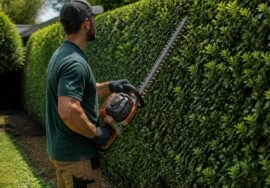
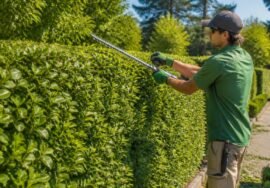
- Tenants typically handle watering, mowing, weeding, raking and trimming hedges to a set height.
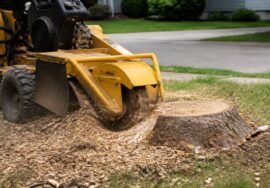
- Landlords usually arrange pruning large limbs, tree removal and stump grinding through a qualified arborist.
- Anything needing a chainsaw above head height or working near powerlines is landlord work.
- Inspect trees at least once a year, after severe storms, and at each tenancy change with dated photographs.
- Never let a tenant remove a tree without written landlord approval, as councils may also require a permit.
Table of Contents
- Landlord and Tenant Garden Maintenance Responsibilities Explained
- Tree Pruning for Rental Properties: Who Decides and Who Pays
- Rental Property Tree Safety: Hazards, Inspections and Emergency Response
- Removing a Tree Without Approval: Permissions, Damage and Compensation
- Writing a Rental Property Garden Maintenance Agreement That Works
- Booking Your Next Tree Inspection or Maintenance Visit
- Frequently Asked Questions
Landlord and Tenant Garden Maintenance Responsibilities Explained
Who looks after the trees on a rental property? In most Australian tenancies, the answer splits in two: the tenant handles routine garden care, and the landlord is responsible for major tree work.
Tree maintenance for rental properties depends heavily on the tenancy agreement and the residential tenancy law that governs it. Trees sit in the grey zone between the landlord’s duty to keep the property in good repair and the tenant’s duty to keep the premises reasonably clean and tidy, which is why a written agreement matters so much.
Routine garden upkeep tenants usually handle
Tenants typically take on the everyday work that keeps a garden looking cared for. This is the ordinary upkeep that most tenancy arrangements expect from the occupant:
- Watering, mowing, edging and weeding
- Raking leaves and clearing fallen debris from paths
- Trimming hedges and small shrubs to a height that does not block walkways
Routine upkeep is low-risk and low-cost. Problems start when a tenant is asked to do work beyond that scope, such as cutting into a mature tree or clearing a stump, because those tasks need training, equipment and insurance.
Major tree work landlords usually arrange
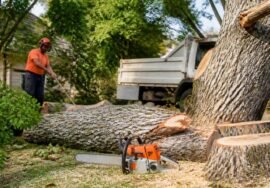
Major tree work is the landlord’s job in most cases. That includes pruning large limbs, lopping, removing a tree, grinding a stump, and assessing whether a tree is structurally unsafe. Landlords are generally expected to arrange these jobs through a qualified arborist.
Here is a summary of how responsibilities for rental property trees typically divide:
| Task | Usually handled by | Typical reason |
|---|---|---|
| Watering, mowing, weeding | Tenant | Routine upkeep |
| Hedge trimming to a set height | Tenant | Routine upkeep |
| Pruning overhanging branches | Landlord | Requires qualified arborist |
| Tree removal or stump grinding | Landlord | Major work, needs permissions |
| Hazard assessment after storms | Landlord | Landlord’s duty of repair |
Tree Pruning for Rental Properties: Who Decides and Who Pays
Pruning is the fault line in most tree disputes because it sits between cosmetic upkeep and genuine safety work. A tenant may want a tree trimmed to let in light or reduce leaf litter; a landlord may see no reason to spend money on a tree that is not causing damage. The disagreement is rarely about the tree, it is about who holds the decision and who carries the cost.
The decision framework: safety, structure, and amenity
A workable rule is to sort every pruning request into one of three buckets before anyone picks up a saw:
- Safety work, dead limbs, cracked unions, branches over a path, roof or powerline, or a tree that has started to lean. The landlord generally decides and pays, because the duty to keep the property in good repair and safe usually sits with them under residential tenancy law.
- Structural work, reducing a canopy, removing a large limb, or correcting a tree that has outgrown its space. The landlord decides, usually after a qualified arborist has assessed the tree, and pays.
- Amenity work, trimming a hedge to a set height, tidying small shrubs, or removing low suckers. This is routine upkeep and normally falls to the tenant under the tenancy agreement.
Anything that requires a chainsaw above head height, a ladder, or working near powerlines is not routine upkeep, regardless of what the lease says. Those tasks need training, equipment and public liability cover, and a tenant who attempts them risks injury and damage to the property.
Who pays when the request is borderline
Costs follow the same logic as the decision. Landlords generally pay for pruning that protects the property, keeps it safe, or restores it to the condition it was in at the start of the tenancy.
Where a tenant asks for pruning that goes beyond the agreement, for example, removing a healthy tree to improve a view, it is reasonable for the landlord to ask who will bear the cost before any work begins.
A simple test: if the work would need a permit, an arborist, or a spotter near powerlines, it is landlord work. If it can be done with hand tools from the ground, it is usually tenant work.
How state and territory rules change the answer
Residential tenancy law varies between jurisdictions, so the exact wording of the landlord’s repair duty and the tenant’s upkeep duty should be checked against the law that applies to the property.
What does change by jurisdiction is the permit regime. Many councils regulate pruning and removal through local planning or vegetation controls, and some trees may be protected regardless of who owns the land.
What to put in the lease
The cleanest way to avoid a pruning dispute is to name the split in the tenancy agreement. A short schedule listing the trees and hedges on the property, the routine tasks the tenant handles, and the categories of work the landlord will arrange through a qualified arborist removes most of the guesswork. Review it at each renewal and whenever the garden changes significantly.
Rental Property Tree Safety: Hazards, Inspections and Emergency Response
Tree safety is an area of rental property maintenance where a delay can turn a repair bill into an injury claim. Most failures give warning signs weeks or months before a limb drops, which is why a simple inspection routine is worth more than a reactive call after a storm.
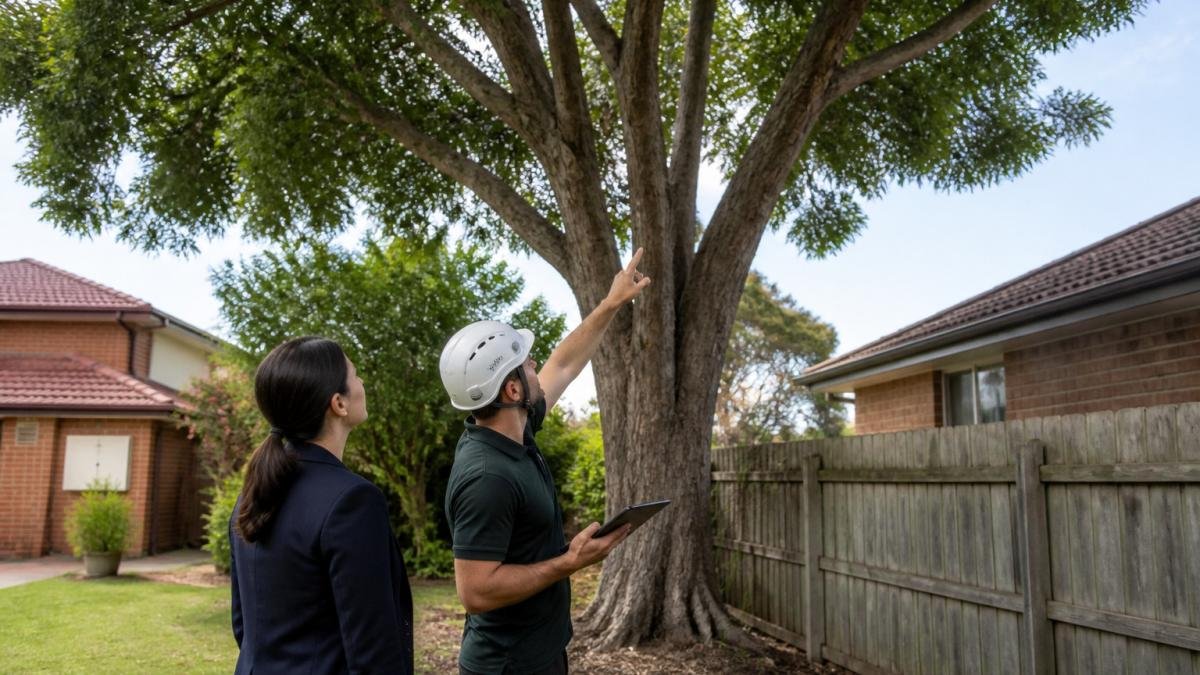
A practical inspection schedule
A workable schedule for a rental property looks like this:
- Once a year, ideally in late winter or early spring, a walk-around of every tree on the block, checking trunk, unions, canopy and root zone. This is the main inspection and the one to document.
- After any severe storm or high-wind event, a visual check for hanging limbs, split unions, lifted roots and debris against the building.
- At each tenancy change, a condition check with dated photographs, so the incoming and outgoing tenant both have a baseline.
A qualified arborist is generally the right person to carry out the annual inspection on any tree large enough to hit a dwelling, path or powerline. Smaller ornamental trees can usually be checked by the landlord or property manager.
What to look for: hazard signs and what they mean
A useful inspection looks for a short list of signs, each of which points to a specific failure mode:
- Dead or hanging branches, the most common cause of sudden limb drop, often after drought or storm damage.
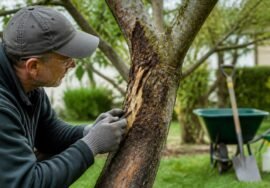
- Cracks, cavities or split unions, structural weakness where two limbs meet; a common failure point on older eucalypts.
- Fungal growth at the base or on the trunk, often a sign of root or heartwood decay, which reduces the tree’s ability to hold itself up.
Tenants can help by reporting any of these signs early. A short note in the lease explaining what to look for and who to contact turns the tenant into an extra set of eyes without asking them to make safety decisions.
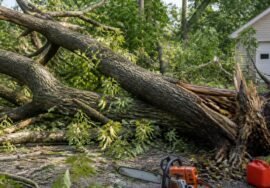
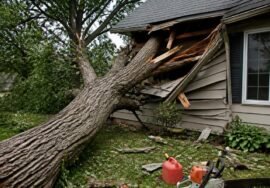
Emergency response: what to do when a tree comes down
If a tree falls or a large limb comes down, the priority order is safety, then containment, then repair:
- Move people and pets clear of the tree and any hanging limbs.
- Keep away from powerlines. If a tree is touching or near a powerline, do not approach it. Contact the electricity distributor for the area, they handle line clearance, not the landlord or the arborist (Legislation, policies and areas).
- Contact the landlord or property manager immediately, with photographs if it is safe to take them.
- Arrange emergency make-safe work through a qualified arborist before any permanent repair or removal is planned.
- Document everything, dated photographs, correspondence, and the arborist’s written assessment, for the insurance claim and any later dispute.
Never ask a tenant to clear a fallen limb near a powerline, a roof, or a fence. Those jobs need an arborist and, where powerlines are involved, the distributor.
Documenting condition for the file
A dated photo log of each significant tree, taken at the annual inspection and at each tenancy change, is the single most useful safety record a landlord can keep. It shows the tree’s condition over time, supports any insurance claim, and gives both parties a clear reference point if a tenant later reports a hazard or removes a tree without approval.
Removing a Tree Without Approval: Permissions, Damage and Compensation
Removing a tree without approval is one of the costliest mistakes a tenant can make.
Many councils also regulate tree removal through local planning or vegetation controls, and some trees are protected regardless of who owns the land.
If a tenant removes or seriously damages a tree without permission, the landlord may seek compensation for the loss, including replacement and removal costs.
Writing a Rental Property Garden Maintenance Agreement That Works
A written rental property garden maintenance agreement removes most of the guesswork. It should set out, in plain language, which tasks the tenant handles, which the landlord arranges, how faults are reported, and who pays for what.
A useful agreement covers:
- A list of routine tasks the tenant is responsible for, and how often
- The categories of major work the landlord will arrange through a qualified arborist
- A process for reporting hazards, with response times
Agreements should be reviewed when the tenancy renews and whenever a property’s garden changes significantly. Keeping a signed copy and dated photographs on file gives both parties a clear reference point.
Booking Your Next Tree Inspection or Maintenance Visit
If you are a landlord or property manager with trees that need attention, the simplest next step is a professional inspection. A qualified arborist can identify hazards, recommend pruning or removal where needed, and give you a clear written record for your files. Book a tree inspection or maintenance visit through Trees Hedge and Stump Removal, and if a tree needs major work, you can get the process for removing a large tree in Melbourne explained before deciding how to proceed.
Frequently Asked Questions
Who is responsible for tree maintenance at a rental property?
Responsibility is split. Tenants generally handle routine garden upkeep such as watering, mowing, edging and weeding, while the landlord or property manager is usually responsible for major tree work like pruning large limbs, lopping, and removal. Dangerous trees and anything affecting safety or structures normally fall to the owner. The exact split should be set out in the tenancy agreement, and the rules differ between states and territories, so check the residential tenancy legislation that applies where the property is located.
Are tenants responsible for pruning trees in a rental property?
Usually only light, routine pruning, such as trimming hedges or removing small overhanging branches that obstruct paths. Cutting back large branches or working near power lines is major work, and it is normally the landlord’s job to arrange through a qualified arborist. Tenants should report any branch that looks unsafe rather than attempting heavy pruning themselves, which could cause injury or property damage.
Can a tenant remove a tree from a rental property?
Not without the landlord’s written permission. Removing or substantially altering a tree at a rental property without approval can breach the tenancy agreement and may leave the tenant liable for the cost of replacement or compensation. Some trees may also be protected under local council planning controls, so removal may require a permit regardless of who asks. Tenants who believe a tree is dangerous should report it to the property manager in writing and keep a record of the request.
How should landlords handle a dangerous tree at a rental property?
Act promptly. Arrange an inspection by a qualified arborist, document the findings, and carry out any recommended work or removal. Notify the tenant of any restrictions on use of the area while the risk remains, and keep records of the inspection and repairs. Check your building and public liability insurance, because a dangerous tree that causes injury or property damage can lead to claims.
What tree maintenance should be included in a rental property garden agreement?
A clear agreement should list the routine tasks the tenant performs, such as watering, mowing, edging and weeding, and state that major pruning, lopping and removal are the landlord’s responsibility. It should cover reporting obligations for unsafe branches, a rule that no tree is removed or altered without written permission, and how overhanging branches near footpaths or neighbouring properties will be handled.
How often should trees at a rental property be inspected?
There is no single legal interval, but a practical schedule is an inspection at least once a year, plus after severe weather such as storms or high winds. Trees near buildings, driveways, footpaths or power lines warrant closer checks. Inspections should look for dead or hanging branches, cracks, fungal growth, lean and root damage.
Can a landlord require a tenant to maintain the garden?
Yes, a landlord can require a tenant to carry out routine garden maintenance if this is written into the tenancy agreement. The obligation should be reasonable and limited to ordinary upkeep. Tenants cannot be required to carry out work that is unsafe for them, such as climbing trees or working with chainsaws, and major tree work remains the landlord’s responsibility.