The Best Time of Year for Hedging: A Seasonal Guide
Last Updated: November 2, 2026
Quick Summary
The best time of year for hedging depends on the job: plant in autumn or late winter for bare-root stock, formative prune young hedges in late winter to early spring, and trim established hedges during active growth from late spring into early summer. Each window matches a different task, so timing the job correctly is what keeps a screen dense and healthy.
- Autumn planting gives roots the longest run before summer, with late winter a close second for bare-root stock.
- Bare-root hedging must go into the ground while still dormant, never into frozen ground or standing water.
- Prune evergreen hedges in late spring to early summer, once the risk of frost has passed.
- Prune deciduous hedges in late winter while dormant, or in early summer once growth is underway.
- Always check for active nests and delay the trim if birds are present.
Table of Contents
- Why Hedging Timing Decides Whether Your Screen Thrives
- Planting Versus Pruning: Three Hedge Jobs With Different Calendars
- The Best Time of Year to Plant a Hedge
- The Best Time to Trim Hedges for a Tidy, Dense Finish
- When to Prune Evergreen Hedges Without Causing Frost Damage
- When to Prune Deciduous Hedges Around Their Growth Phase
- How Often to Trim Hedges by Species and Growth Rate
- Wildlife, Nesting Birds and Weather Exceptions to the Calendar
- Frequently Asked Questions
Why Hedging Timing Decides Whether Your Screen Thrives
The best time of year for hedging is not one date on a calendar.
Hedges planted or cut in the wrong season can take far longer to establish, and some never fill out evenly. For more on why timing pays off, see why regular hedge pruning benefits your garden.
Below, we break the year into the jobs that actually matter, from bare-root planting in late winter to the last trim before the cold sets in.
Planting Versus Pruning: Three Hedge Jobs With Different Calendars
Most hedging advice collapses three separate tasks into one, and that is where confusion starts. Our hedging and trimming service overview shows what each job involves. Planting, formative pruning, and routine trimming each have their own timing rules and their own purpose.
Planting, Formative Pruning and Routine Trimming Compared
Planting is establishment. The goal is to get roots into soil while conditions favour root growth rather than top growth.
Formative pruning shapes a young hedge in its first two or three years. It builds the framework that determines whether the hedge ends up dense or leggy.
Routine trimming maintains an established hedge. It removes the season’s growth to keep a crisp face and a tight surface.
| Job | Purpose | Best Window | Frequency |
|---|---|---|---|
| Planting | Establish roots | Autumn; late winter for bare-root | Once |
| Formative pruning | Build dense framework | Late winter to early spring | 1-2 times in first 3 years |
| Routine trimming | Maintain shape and density | Active growth, early summer | 1-3 times per year |
The Best Time of Year to Plant a Hedge
Autumn is the strongest planting window for most hedges, with late winter a close second for bare-root stock. Both windows share one thing: soil is workable and moisture is reliable, so roots establish before the plant is asked to push new top growth.
Autumn Planting and Workable Soil
Autumn gives new hedges the longest possible run at root development before summer. Soil is still warm from the growing season, air temperatures are falling, and rainfall becomes more dependable.
A common mistake is planting too late in autumn and then hitting a dry spell with no established roots to draw on. Water deeply through the first season regardless of rain.
Winter Planting, Bare-Root Stock and Dormant-Season Benefits
Bare-root hedging plants are lifted and sold while dormant, and late winter is when they settle in best.
Watch out: bare-root stock must go into the ground while it is still dormant. Once buds break, the advantage is gone and the plant struggles. Never plant into frozen ground or standing water, and keep roots covered and moist between delivery and planting.
The Best Time to Trim Hedges for a Tidy, Dense Finish
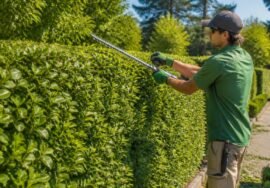
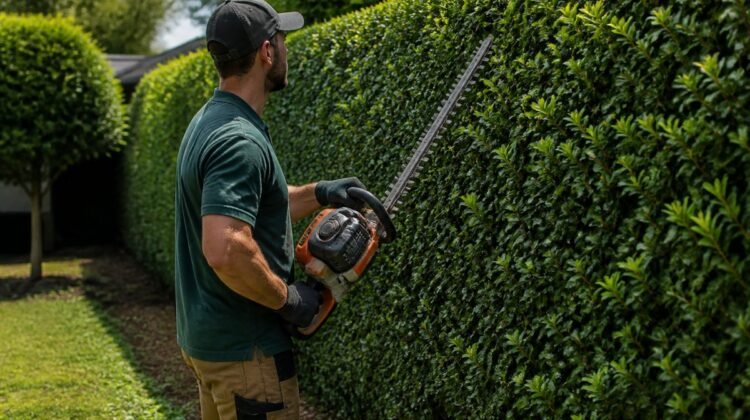
The best time to trim hedges is during active growth, from late spring into early summer, when the hedge can heal cuts quickly and push new shoots from the trimmed face.
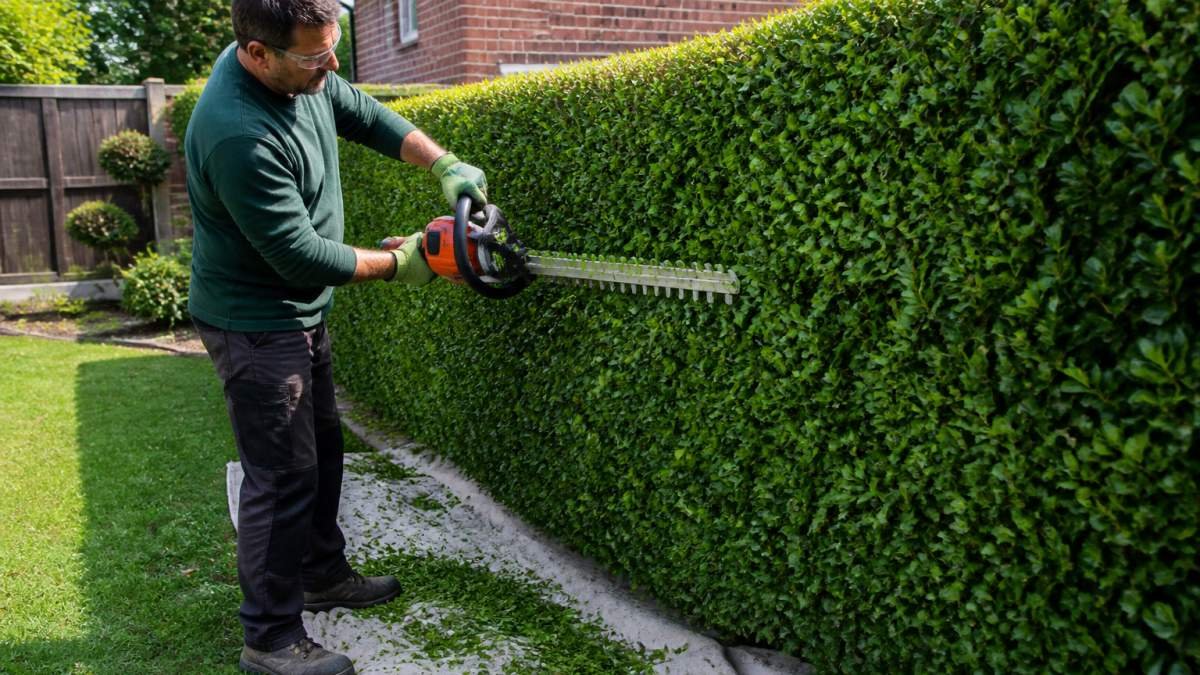
Timing details matter more than most guides admit. Leave the final trim late enough that the cut surfaces harden before frost, but early enough that the hedge is not pushing soft growth into winter.
A Month-by-Month Trimming Calendar
Season names and months shift with climate zone, so treat the calendar below as a pattern to adapt rather than a fixed schedule. In warm temperate and subtropical areas, shift each window two to four weeks earlier; in cool temperate and highland areas, shift it two to four weeks later.
| Month | Task | Suitable Conditions | Exceptions |
|---|---|---|---|
| Late winter (Aug) | Formative prune of young deciduous hedges | Dormant, dry foliage, no frost forecast | Skip if nesting birds are active |
| Early spring (Sep) | Light tip trim on established evergreens | New growth underway, soil moist | Hold if frost is still likely |
| Late spring (Oct-Nov) | First main trim of fast growers | Active growth, mild temperatures | Avoid heat stress days |
| Early summer (Dec) | Main trim of box, privet, yew | First flush hardened, dry foliage | Delay if nesting birds present |
| Late summer (Feb) | Second trim of vigorous hedges | Growth slowing, no heatwave | Skip if drought-stressed |
| Early autumn (Mar) | Final light shape only | Mild, soil still warm | No heavy cuts before frost |
| Mid-autumn to winter | No routine trimming | , | Dormant season is for planting and formative work |
Climate and Regional Adaptation
A calendar built for one climate will misfire in another. In humid subtropical and tropical areas, hedges grow almost year-round, so trimming shifts to a little-and-often pattern with lighter cuts and more frequent passes. In cool temperate and alpine areas, the active-growth window is shorter, so concentrate trimming into late spring and early summer and avoid any cut that triggers soft growth within about eight weeks of the first frost.
Aftercare Following Trimming
A clean cut is only half the job. Water deeply if the hedge is under moisture stress before you cut, and again after a heavy trim. A light mulch over the root zone holds moisture and moderates soil temperature. Check the trimmed face over the following fortnight for browning or dieback, which usually signals a cut made too hard into old wood or during heat.
Watch out: trimming wet foliage can spread disease between plants, and cutting during a heatwave can scorch exposed surfaces.
When to Prune Evergreen Hedges Without Causing Frost Damage
Prune evergreen hedges in late spring to early summer, once the risk of frost has passed.
The safe rule is simple: wait until new growth is clearly underway, then cut. Light shaping can continue through summer.
Species timing varies. Box and yew respond well to a trim in early summer and again in late summer. Privet is vigorous and tolerates harder cutting, but the same frost rule applies.
When to Prune Deciduous Hedges Around Their Growth Phase
Prune deciduous hedges in late winter while they are dormant, or in early summer once the growth phase is underway.
Late winter cutting suits hornbeam, beech, and similar deciduous screens. It also avoids the nesting season, which is a real constraint rather than a formality.
A common mistake is hard-pruning deciduous hedges in autumn. The plant pushes soft regrowth that has no time to harden, and winter damage follows.
How Often to Trim Hedges by Species and Growth Rate
How often you trim depends on growth rate, species, and how formal the finish needs to be. A slow-growing box hedge needs far fewer cuts than a vigorous privet or leylandii screen.
Trimming Frequency by Hedge Type
| Hedge Type | Growth Rate | Trims per Year | Main Window | Notes |
|---|---|---|---|---|
| Box | Slow | 1-2 | Early summer | Tight formal faces; light cuts only |
| Yew | Slow to moderate | 1-2 | Late summer | Tolerates hard cutting; avoid autumn |
| Privet | Fast | 2-3 | Late spring to late summer | Vigorous; responds to frequent light trims |
| Leylandii and similar conifers | Very fast | 2-3 | Late spring to early summer | Do not cut into old bare wood |
| Deciduous screens (hornbeam, beech) | Moderate | 1-2 | Late winter, early summer | Dormant prune plus summer tidy |
| Native and informal screens | Variable | 1 | After flowering or active growth | Check nesting birds first |
Timing by Plant Stock Type
How a hedge was supplied changes its first-year timing. Bare-root plants settle best in late winter while dormant, and should not be trimmed hard in their first season, let roots establish before shaping. Root-balled stock planted in autumn can take a light formative trim the following late winter. Container-grown plants are more forgiving and can be planted across a wider window, but still benefit from formative pruning in late winter to early spring once established.
Why Frequency Varies: The Mechanism
Frequency is driven by how much new growth a species pushes each season and how well it regrows from cut wood. The critical limit is old wood: conifers and many evergreens will not reshoot from bare inner branches, so trimming must stay within the current season’s growth (Conifers with Brown Patches: Solutions).
Formal hedges with tight faces need more frequent light cuts; informal screens can be left longer between trims. The key is to trim little and often rather than removing a large amount in one pass, which leaves bare patches that take a season to close.
Aftercare and Signs of Stress
After trimming, water deeply if the soil is dry and mulch the root zone to hold moisture. Over the following weeks, watch for browning on the cut face, which signals a cut into old wood or trimming during heat, and for sparse regrowth, which points to over-cutting or poor establishment.
Watch out: cutting a conifer back into old bare wood leaves a permanent gap that will not regrow, so always stay within the current season’s growth.
Wildlife, Nesting Birds and Weather Exceptions to the Calendar
The calendar is a guide, not a rule, and two things override it: nesting birds and severe weather. Check the hedge before you cut, and delay the trim if a nest is active. If weather or nesting birds push the job back, contact us to arrange help or advice.
Weather exceptions matter too. Skip trimming during heat stress, when cut surfaces scorch and the plant has no moisture to spare. Avoid cutting when frost is forecast, and never work wet foliage that spreads disease between plants.
Hedging timing rewards patience: plant in autumn or late winter, shape young hedges in late winter, and trim established screens during active growth.
Frequently Asked Questions
Is there a wrong time to trim hedges?
Yes. Cutting into tender new growth during a heatwave or in the middle of a frost period stresses the plant and leaves brown, scorched edges. Avoid heavy trimming in the hottest weeks and when frost is expected. Also check for active nesting birds before you cut, because disturbing an occupied nest is a welfare issue and can set the hedge back. Light tidy-ups of wayward shoots are usually fine outside the main windows, but structural cuts are best kept to the recommended seasons.
Can I cut my garden hedge in June?
June sits in early winter, so it suits light formative work on many evergreen hedges while growth has slowed. It is a good month for shaping box and privet that have finished their summer push, and for removing dead or crossing stems. Hold off on hard cuts if heavy frost is forecast, since open wounds on frost-sensitive plants recover slowly. Deciduous hedges are usually dormant by June, which makes it a practical window for structural pruning before spring growth begins.
How do I tell if a hedge actually needs pruning?
Look for shoots breaking the line of the hedge, thinning patches where light cannot reach, and stems crossing or rubbing inside the canopy. A hedge that has lost its shape or is shading out its own lower growth is overdue. Run a hand along the face: if you feel soft new growth well past the intended plane, it is time to trim. Formative pruning of young plants matters more than frequent light cuts, because it builds the dense structure the hedge will keep for years.
Does the best time of year for hedging change with the plant stock type?
It does. Bare-root hedging plants are lifted and sold dormant, so they establish best when planted in the cooler months into moist, workable soil. Container-grown and root-balled stock can go in across a wider planting window because the root system travels intact, though autumn and early winter still give roots the longest run before summer heat. Match your planting date to the stock you buy, then plan trimming around the growth phase that follows.
What happens if I trim an evergreen hedge too late in the season?
Late trimming pushes out fresh soft growth that has no time to harden before cold or heat arrives. That new growth is the first to burn in frost or wilt under water stress, and the cut faces can stay visible for months. Evergreen hedging plants such as box, privet and yew also recover more slowly from a hard cut made outside active growth. If you must tidy late, keep it light and leave the structural shaping for the correct window.