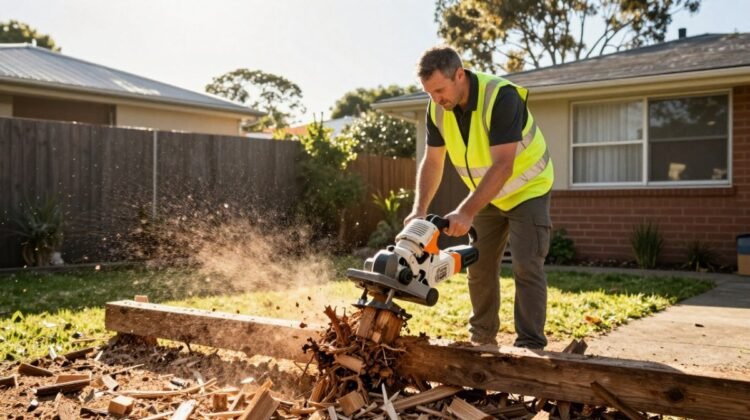
How to Safely Remove Tree Stumps Without Damage
Last Updated: November 15, 2026
Quick Summary
To learn how to safely remove tree stumps, match the method to the stump: hand dig small stumps under about 300mm across, use stump grinding for most larger stumps, and reserve chemical treatment or burning for remote, dry stumps. Always locate buried services and check for overhead lines before any digging or grinding begins.
- Hand digging suits stumps under about 300mm across and takes 2 to 6 hours.
- Stump grinding handles most residential stumps in 1 to 2 hours.
- Chemical stump removers take weeks to months before the wood softens.
- Cut roots at least 300mm from the trunk so you have room to work.
- Backfill the hole in layers and leave a slight mound so it settles level.
Table of Contents
- Tree Stump Removal Methods Compared
- How to Remove a Tree Stump Without a Grinder
- Tools, Equipment and Safety Checklist
- Stump Grinding Safety: What to Know Before You Hire
- How Long Does Stump Removal Take?
- Choosing DIY or Professional Removal
- Filling the Hole and Preventing Regrowth
- Getting a Free Quote for Stump Removal
- Frequently Asked Questions
Tree Stump Removal Methods Compared
Learning how to safely remove tree stumps starts with picking the right method for the stump in front of you. There are four main options: manual digging, stump grinding, chemical treatment, and burning. Each suits a different stump size, location, and budget.
Manual digging works for small stumps. Grinding handles almost anything. Chemical and burning methods are slower and carry real limits.
Here is the honest comparison before you commit to a method.
| Method | Best For | Time | Main Risk |
|---|---|---|---|
| Manual digging | Small stumps, tight access | 2-6 hours | Back strain, hidden roots |
| Stump grinding | Most stumps, fast turnaround | 1-2 hours | Flying debris, buried services |
| Chemical treatment | Remote or hard-to-reach stumps | Weeks to months | Soil and water contamination |
| Burning | Dry, isolated stumps | Several hours | Fire spread, root fires |
Manual Digging and Root Cutting
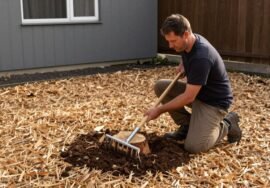
Hand digging is the oldest method and still the most controllable. You expose the root system with a sharp spade, then cut the main roots with a pruning saw, axe, or mattock.
The stump usually comes free once you sever the main roots. Expect to work up a sweat.
A few things we have learned the hard way:
- Cut roots at least 300mm from the trunk so you have use
- Rock the stump back and forth to find roots you missed
- Keep a wedge and sledgehammer handy for stubborn stumps
- Stop if you hit a root running toward a fence or pipe
Small stumps under about 300mm across are the realistic target here. Anything larger will fight back.
Chemical Stump Treatment and Burning
Chemical stump removers speed up natural decay. You drill holes into the stump, fill them with the product, and wait. Most take weeks to months before the wood softens enough to break apart.
Epsom salt is sometimes used as a home alternative, though it acts slowly.
Burning is faster but riskier. The stump must be dry, well clear of buildings and fences, and checked against local fire restrictions. Root fires can smoulder underground and surface days later.
Watch out: burning a stump near a structure or in dry conditions is how small jobs become insurance claims. If the stump sits close to anything you value, skip the fire.
How to Remove a Tree Stump Without a Grinder
Removing a stump without a grinder means digging, cutting, and pulling. It is doable for small to medium stumps if you accept the physical work and plan the steps.
Before you start, understand that this method has real risks. The risks of DIY tree removal go beyond a sore back, from chainsaw kickback to damaged underground services. Read up before you pick up a tool.
Here is the step-by-step approach we would use:
- Clear the area and check for buried pipes, cables, and irrigation lines
- Dig a trench around the stump, exposing the root flare
- Cut the main roots with a pruning saw or axe, working around the trunk
- Loosen the stump with a mattock or pry bar and rock it free
- Lift the stump out and fill the hole, or cut it below ground level and bury it
For exposed roots running across a lawn, cut them cleanly below the surface with a sharp spade. Do not rip them out sideways, as this tears the surrounding soil and can destabilise nearby trees.
Tools, Equipment and Safety Checklist
The right tools turn a punishing job into a manageable one. The wrong ones, or none at all, turn it into an injury.
Personal protective equipment:
- Safety glasses or a face shield
- Heavy work gloves
- Steel-capped boots
- Ear protection if using power tools
- Long pants and sleeves
Digging and cutting tools:
- Sharp spade and mattock
- Pruning saw or bow saw
- Axe or hatchet
- Pickaxe for hard ground
- Sledgehammer and wedge
- Pry bar or winch for stubborn stumps
Site checks before you start:
- Locate underground services before digging
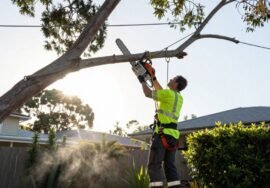
- Check for overhead power lines
- Confirm no fire restrictions apply if burning
- Clear the work zone of people and pets
The pre-work check is where most DIY jobs go wrong. A quick call to locate buried services costs nothing compared with hitting a water main.
Stump Grinding Safety: What to Know Before You Hire
Stump grinding is generally one of the quicker ways to remove most stumps, but only when it is done properly. A grinding machine throws wood shavings and debris at speed, so the work zone matters.
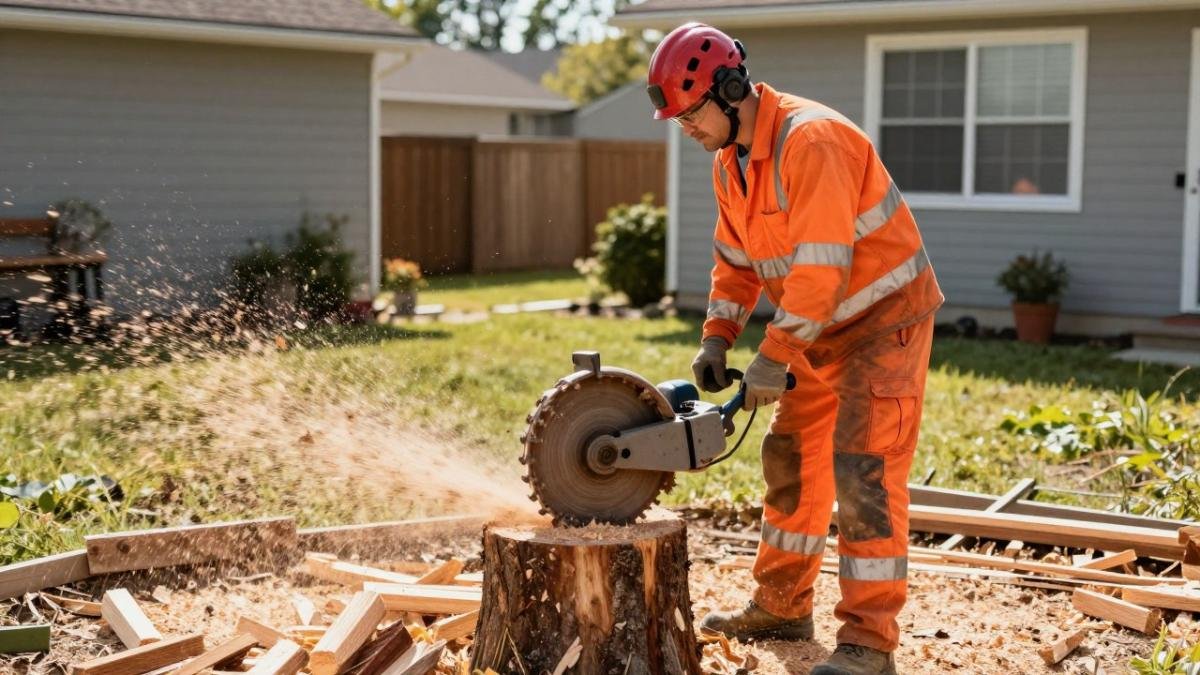
Before any grinding starts, the operator should:
- Confirm the location of underground services and irrigation
- Clear a safety zone of at least a few metres around the machine
- Wear eye, ear, and face protection
- Warn neighbours and keep children and pets indoors
- Check the grinder’s guards and cutting teeth are secure
Stumps are ground to below ground level so the area can be backfilled and replanted.
If you hire a contractor, ask how deep they grind and whether they remove the grindings. Shallow grinds are a false economy.
How Long Does Stump Removal Take?
Stump removal time depends on the method, the stump diameter, and the wood. A small stump dug by hand can take a couple of hours. A large stump ground by machine is often done within an hour or two.
Rough guide:
- Hand digging, small stump: 2 to 6 hours
- Hand digging, large stump: a full day or more, often not worth it
- Stump grinding: 1 to 2 hours for most residential stumps
- Chemical treatment: weeks to months
- Burning: several hours, plus monitoring afterwards
Hard, dense timber slows every method. So does a stump tangled in roots near a fence or driveway.
In general, grinding is a faster route for stumps beyond a small size.
Choosing DIY or Professional Removal
DIY removal makes sense for small stumps in open ground with easy access. Professional removal makes sense for everything else, especially large stumps, tight spots, and anything near structures or services. The middle ground can be harder to judge, so use the factors below rather than a single size cutoff.
The factors that actually decide it
Stump diameter. As a rough guide, stumps under about 300mm across are realistic for hand digging. Between 300mm and 600mm, the job is possible but slow and physically punishing.
Species and wood hardness. Dense hardwoods resist both saws and grinders, and some species send up vigorous suckers from leftover roots.
Root spread and surface roots. A stump with roots running under a driveway, fence, or paving is a professional job, because cutting the wrong root can crack hard surfaces or destabilise a nearby tree.
Access. A grinder needs a clear path to the stump, typically a gate width and a firm surface.
Proximity to services and structures. Anything within reach of buried services, overhead lines, or a building shifts the decision to professional. The pre-work checks matter more than the method here.
Number of stumps. Multiple stumps change the economics. A single small stump is a weekend DIY job; several stumps across a property are usually faster and less disruptive handled in one grinding visit.
A practical decision path
- Measure the stump across the cut surface and note the species if you can identify it.
- Check access: can a machine reach the stump, and is the ground firm?
- Look for surface roots and note what they run toward.
- Confirm the location of buried services and overhead lines before any digging.
- If the stump is small, accessible, clear of structures and services, and you are comfortable with the physical work, DIY is reasonable.
- If any of the above is uncertain, or the stump is large, get a professional assessment.
If you are leaning toward hiring, our stump removal and grinding service shows what a professional job involves. It is also worth understanding what drives professional stump grinding cost before you compare quotes, so you know what you are paying for.
We are a family-owned business with fully qualified local arborists, and we are happy to talk through the options before you commit.
Filling the Hole and Preventing Regrowth
A stump is only half the job. The hole and any leftover roots need handling, or you will be back where you started.
After grinding or digging, backfill the hole with soil and compact it in layers. Leave a slight mound so it settles level. Then top with lawn seed or turf if the area was grass.
To stop regrowth:
- Remove or grind the stump below ground level
- Clear the wood shavings and debris from the hole
- Watch the spot for suckers over the next few months
- Cut any new shoots immediately if they appear
Once the stump is gone, preparing your lawn after stump grinding is the next step. It covers backfilling, levelling, and getting grass growing again.
Getting a Free Quote for Stump Removal
A sound way to approach stump removal is to match the method to the stump, then do the pre-work checks before any tool comes out. Small stumps in open ground are a DIY job. Large stumps, tight access, and anything near services are a professional job.
If you would like it handled by professionals, we can help. Our team includes fully qualified local arborists, and you can visit our website for current pricing or a quote.
Ready to get rid of a stump? Contact us to request a free quote and we will assess the stump and recommend a suitable method.
Removing a stump safely comes down to knowing your limits and checking the site before you start. Trees Hedge and Stump Removal takes the risk out of the job with qualified arborists, professional stump grinding, and fast turnaround on quotes. Get started with Trees Hedge and Stump Removal and clear your yard safely.
Frequently Asked Questions
What is the safest way to remove a tree stump?
For many homeowners, hiring a qualified arborist to grind the stump is a sensible option. Grinding removes the stump without the risks of digging near buried services, chainsaw kickback or fire. If you remove it yourself, call 1100 Before You Dig to check for underground utilities, wear protective equipment and keep bystanders clear. Small stumps can be dug out by hand, but anything close to a building, fence or powerline is better left to a professional.
How do I remove a tree stump without a grinder?
You can cut exposed roots with a pruning saw or axe, then lever the stump out with a sharp spade, mattock and sledgehammer. For small stumps, dig around the base, sever the main roots and rock the stump loose. Chemical stump removers and Epsom salt speed up decay but take weeks or months to work. Burning is an option in some areas but carries fire risk and may be restricted by local council rules, so check before you light anything.
How long does stump removal take?
A small stump can be dug out by hand, and grinding time depends on diameter and root spread. Chemical treatment takes several weeks to months to break the wood down. Larger stumps, tight access or extensive root systems all add time, which is why an on-site quote gives the most accurate estimate.
What should I do with the hole after removing a tree stump?
Backfill the hole with soil, compost and wood shavings from the grinding, then compact it in layers so it does not sink later. If you plan to replant, leave the grindings to break down or remove them and bring in fresh topsoil. Level the surface, water it in and reseed or lay turf. Avoid planting a new tree in the same spot straight away, as the old root system can still affect drainage and soil stability.