The Homeowner’s Guide to Hiring Professional Arborists in Melbourne
Last Updated: November 12, 2026
Quick Summary
Hiring professional arborists in Melbourne means engaging a trained tree-care specialist who assesses tree health, structure and risk before carrying out the work safely. Ask who holds the qualification, who will assess the tree and who will climb it, and get an itemised written quote before you commit.
- A Certificate III or above from a registered training organisation is the baseline qualification to ask for.
- Ask who will assess the tree and who will climb it, and confirm both competencies.
- Council approval depends on your local planning scheme and any vegetation overlay protecting the tree.
- An itemised quote should cover tree identification, method, access, stump, green waste and cleanup.
- Where one quote is silent on a line, treat it as excluded until confirmed in writing.
Table of Contents
- What Professional Arborists in Melbourne Actually Do
- How to Tell a Qualified Arborist From a Backyard Operator
- Tree Removal in Melbourne: What the Job Really Involves
- Council Approval for Tree Removal: When You Need It
- Getting a Tree Removal Quote You Can Compare
- Safety, Site Protection and What Happens After the Job
- Book a Free On-Site Quote With a Local Tree Team
- Frequently Asked Questions
What Professional Arborists in Melbourne Actually Do
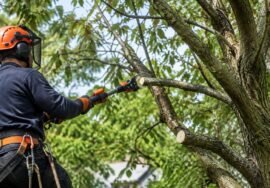
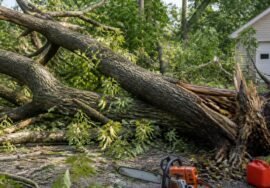
Hiring professional arborists in Melbourne starts with understanding what you are paying for. An arborist is a trained tree-care specialist who assesses tree health, structure and risk, then carries out the work safely. At Trees Hedge and Stump Removal, our qualified arborists handle everything from storm-damaged removals to routine pruning across residential and commercial properties.
The work is broader than most homeowners expect. A good crew reads the tree before touching a saw.
From Tree Health Checks to Stump Grinding
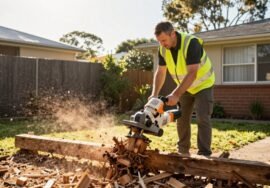
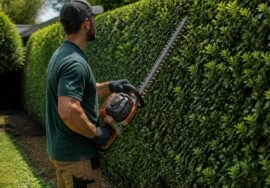
Tree assessment comes first. We check for disease, decay, root damage and structural weakness, then recommend the least invasive option that solves the problem. From there, the service list covers tree removal, stump grinding, tree pruning and maintenance, hedge trimming, land clearing and mulching, plus written arboricultural advice when a report is needed.
How to Tell a Qualified Arborist From a Backyard Operator
Qualification in tree work is tiered, and the tier matters. A crew can legitimately include assistants who hold no arboriculture qualification at all, provided they work under the direction of someone who does, so the question to ask is not ‘is everyone qualified?’ but ‘who is the qualified arborist directing this job, and what do they hold?’
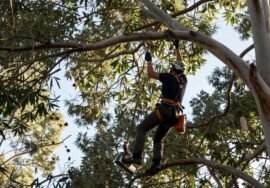
There is also a practical split between assessment and execution. The person who inspects the tree and recommends removal or retention should be able to explain the reasoning in terms of species, condition, structure, targets and likelihood of failure. The person who climbs and cuts needs climbing, rigging and chainsaw competency. On larger jobs these are often different people, and a good provider will tell you which is which rather than letting one title cover both.
A Practical Verification Sequence
Work through these in order before you commit:
- Ask for the qualification and the issuing body. A Certificate III or above from a registered training organisation is the baseline. Note the level, not just the word ‘qualified’.
- Ask who will assess the tree and who will climb it. If the answer is the same person, confirm they hold both the assessment and the climbing competency.
- Ask what happens on the day if the tree is more compromised than the quote assumed. A professional will describe a stop-and-reassess trigger; a backyard operator will say it will be fine.
- Ask for two recent local jobs of similar scale and, where the client is willing, a reference you can call.
- Ask how the crew will protect the house, fence, driveway and garden beds, and what exclusion zone they will set.
- Ask who handles green waste and whether it is included in the written scope.
Tree work is dangerous, and the Safe Work Australia guidance on tree work and falling objects sets out why unqualified operators put everyone nearby at risk. A cheap quote that skips rigging, traffic control or a spotter is not a bargain, it is a transfer of risk onto your property and your neighbours.
Watch out: a provider who cannot name the qualification held by the person doing the assessment, or who deflects the question to ‘years of experience’, is telling you something. Experience is not a substitute for the competency framework, and the two are easy to confirm separately.
If you are weighing up whether to do it yourself, read about the risks of DIY tree removal before you decide.
Here is the verification sequence to work through before you commit to a crew.
| Step | What to ask |
|---|---|
| 1 | Qualification and issuing body; Certificate III or above baseline |
| 2 | Who assesses the tree and who climbs it |
| 3 | What happens if the tree is more compromised than quoted |
| 4 | Two recent local jobs of similar scale, plus a reference |
| 5 | How house, fence, driveway and garden beds are protected |
| 6 | Who handles green waste and whether it is in scope |
Tree Removal in Melbourne: What the Job Really Involves
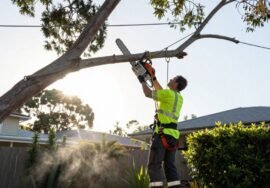
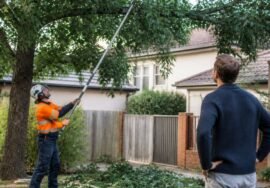
Tree removal is a controlled dismantling process, not a felling race. On a suburban block, most removals are rigged: climbers set ropes, cut sections in sequence and lower each piece to the ground crew. That protects the house, the fence and anyone walking past.
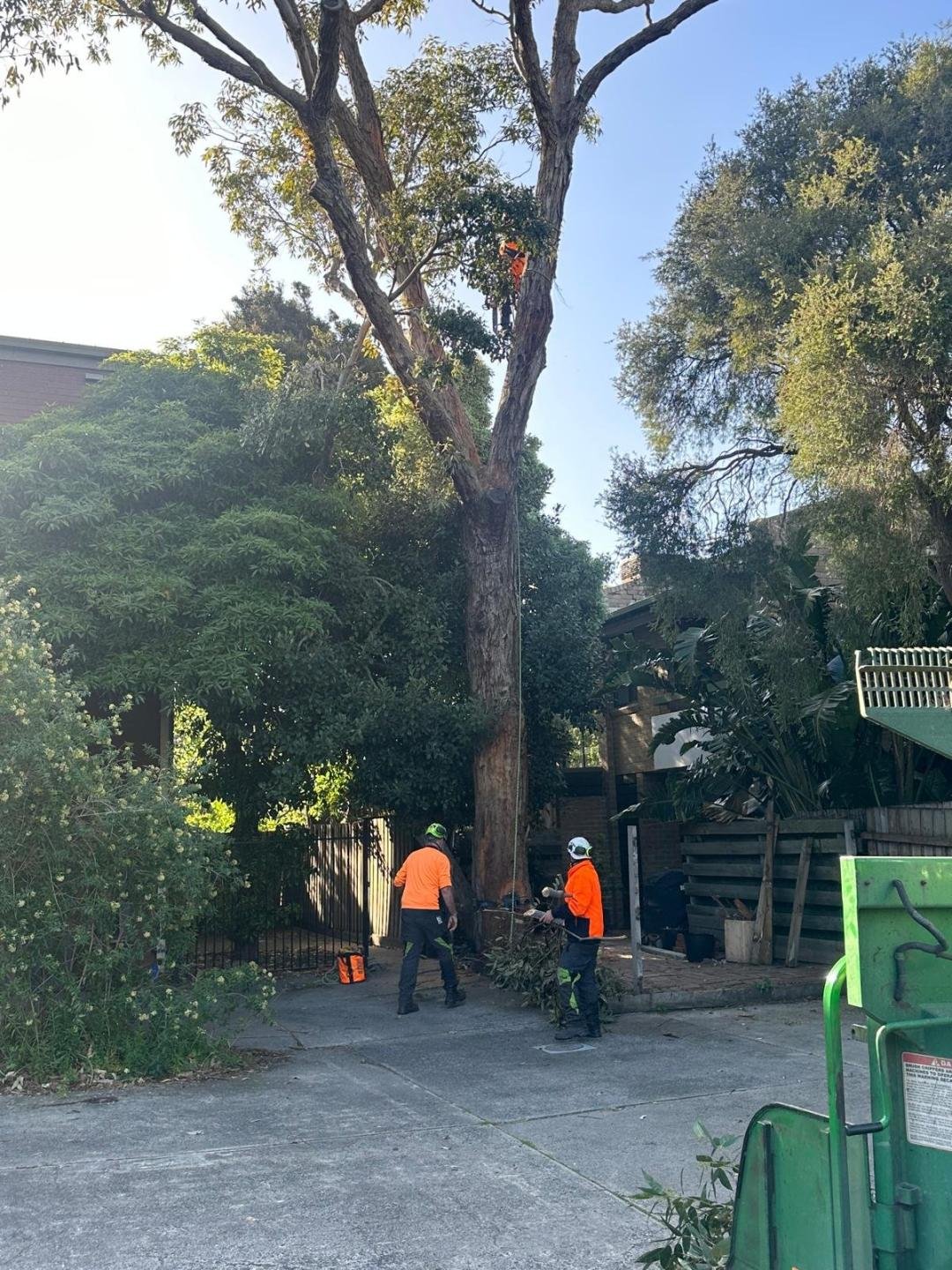
The process usually runs in four stages: a site inspection and risk assessment, setting up exclusion zones and rigging, section-by-section removal, then stump grinding and cleanup. Large gum trees near powerlines need the supply authority involved before any cutting begins.
Council Approval for Tree Removal: When You Need It
Council approval depends on your local planning scheme and whether the tree is protected by a significant landscape or vegetation overlay. Check with your local council before booking removal, because removing a protected tree without approval can lead to penalties.
If you are unsure where your property stands, our guide on whether you need a permit to remove a tree walks through the questions councils ask.
Getting a Tree Removal Quote You Can Compare
A tree removal quote is only useful if it is written down, itemised and specific to your tree. The single biggest reason quotes for the same tree diverge is that they are not quoting the same job. Before you compare totals, make sure each quote answers the same set of questions in writing.
What an Itemised Quote Should Set Out
- Tree identification and count. Species, approximate height and trunk diameter at breast height, and how many trees are in scope. ‘One large gum’ is not a scope.
- Method. Whether the tree will be felled in one piece or dismantled section by section with rigging, and why that method was chosen.
- Access and setup. Where the truck and chipper will stand, whether a crane or elevated work platform is needed, and what permits or traffic management that requires.
- Powerlines and services. Whether the supply authority needs to be involved before cutting, and who arranges it.
- Stump. Whether stump grinding is included, and to what depth below ground level.
- Green waste. Whether chipping, removal and disposal are included, and whether mulch is left on site or taken away.
- Site protection and cleanup. Protection for driveways, fences and garden beds, and what raking and cleanup is included.
- Exclusions and contingencies. What is not covered, and what triggers a variation, for example a tree found to be hollow at the base once climbing begins.
- Validity period and payment terms. How long the quote holds and when payment falls due.
How to Compare Two Quotes Line by Line
Put the quotes side by side and match each line to the list above. Where one quote is silent on a line, treat it as excluded until the provider confirms otherwise in writing. A quote that omits stump grinding, waste removal or site protection is not cheaper, it is a smaller job, and the difference will surface later as a variation or as work you have to arrange yourself.
A common pattern is for the lowest quote to be the one with the shortest written scope. The useful comparison is not the total at the bottom but the total for the same defined scope, including disposal and cleanup.
Watch out: a verbal quote, or a written quote with a single lump-sum figure and no scope, gives you nothing to hold the provider to if the job changes mid-removal. Ask for the itemised version before you compare anything.
Our breakdown of what drives tree removal costs explains the variables, access, height, rigging, disposal and stump size, so you can read each quote with the same lens and spot which lines are doing the work.
Safety, Site Protection and What Happens After the Job
Site protection is the difference between a professional crew and a lucky one. Powerlines, fences, sheds and parked cars all shape how a tree comes down.
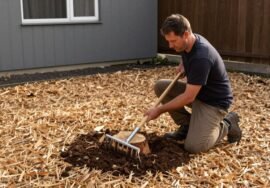
Once the tree is down and the stump ground out, the area is raked and the grindings cleared or spread as mulch. If you want to replant or reseed, our guide to preparing your lawn after stump grinding covers the next steps.
Book a Free On-Site Quote With a Local Tree Team
The safest way to settle the question is a free on-site quote from a crew that inspects the tree in person. We are a family-owned business with fully qualified local arborists and 24-hour emergency service for storm damage. Our tree removal service covers everything from a single hazardous limb to full land clearing.
Tree problems rarely fix themselves, and a leaning limb over a bedroom window will not wait for a convenient weekend. Get a free on-site quote from Trees Hedge and Stump Removal and have a qualified arborist assess the job, explain your options and give you a written price before any work begins.
Frequently Asked Questions
What does a professional arborist do?
A professional arborist assesses tree health and risk, plans and carries out pruning or removal, and advises on species, disease and safe clearance from structures and powerlines. In Melbourne the role often includes writing reports for council applications and managing protected trees. Hiring professional arborists means you get someone who can judge whether a tree can be saved, how much weight a limb can carry, and which cuts keep the tree healthy rather than opening it to decay.
How do I choose a qualified arborist?
Look for a minimum Certificate III in Arboriculture, public liability cover, and a written quote that lists the scope of work, site protection and green waste removal. Ask how long the crew has worked locally and whether the person quoting will be on site for the job. A qualified arborist should be able to explain why a tree needs work, not just quote a figure. Check reviews and ask for recent local jobs similar to yours.
Do I need council approval for tree removal?
Often yes. Many Melbourne councils protect significant trees through planning schemes, and some require a permit before removing or heavily pruning a tree above a certain trunk size. Rules differ between councils and overlays, so confirm with your local council before booking. A reputable tree service can tell you whether a permit is likely and can prepare an arborist report to support the application. Removing a protected tree without approval can lead to fines.
How can I compare quotes for tree work?
Ask every provider to quote on the same written scope: which trees, which cuts, stump grinding depth, green waste disposal, site protection and cleanup. A cheap quote often excludes stump grinding or waste removal, which changes the real cost. Compare at least three quotes and check what each includes rather than the headline figure. Hiring professional arborists on a detailed quote protects you if the job turns out to be bigger than expected.
How long does tree removal usually take?
A small tree in an open yard can come down in a few hours. A large gum near a house or powerlines may take a full day or more because limbs are lowered in sections with rigging rather than felled. Stump grinding adds time, and access, weather and green waste volume all affect the schedule. Ask for a realistic time estimate in the quote and confirm whether the crew will return if the job runs over.
What happens after the stump is ground out?
Grinding breaks the stump into mulch and leaves a hole where the root ball was. A good crew removes the grindings or leaves them for you to use, backfills the hole with soil and levels the surface so you can replant or turf over it. Ask how deep the stump will be ground, since shallow grinding leaves roots that can resprout. Confirm cleanup and disposal are included in the tree removal quote before work starts.