Why Regular Hedge Pruning Benefits Your Garden
Last Updated: October 25, 2026
Quick Summary
Regular hedge pruning encourages dense, healthy growth by stimulating fresh shoots and removing old, woody stems that waste plant energy. When you trim hedges consistently, you also prevent disease and pest problems by improving air circulation, allowing foliage to dry faster, and removing dead branches before infection spreads.
- Prune evergreen hedges in late spring to early summer for strongest regrowth; deciduous hedges in dormant season June to August.
- Trim formal hedges two to three times per year; informal hedges need only one annual cut in late winter.
- Cut at a slight angle just above a leaf node, and slope the hedge wider at the base than the top to ensure light reaches lower branches.
- Remove dead, diseased, or crossing branches first, as these waste plant energy and create entry points for pathogens.
- Spread rejuvenation pruning over two to three years on overgrown hedges rather than cutting hard all at once.
Table of Contents
- How Regular Hedge Pruning Promotes Healthy Growth
- Best Time to Prune Hedges for Maximum Results
- How Often to Trim Hedges Throughout the Year
- Hedge Trimming Techniques That Create Denser Foliage
- How to Make a Hedge Grow Thicker and Fuller
- Preventing Disease and Pest Problems Through Regular Maintenance
- Getting Professional Hedge Pruning Support
- Frequently Asked Questions
How Regular Hedge Pruning Promotes Healthy Growth
Regular hedge pruning is one of the most effective ways to maintain a vibrant, healthy garden structure. When you trim hedges consistently, you encourage the plant to direct energy into new growth rather than maintaining old, woody stems. This stimulates the development of fresh shoots and denser foliage, which strengthens the overall plant structure and improves its ability to withstand environmental stress.
Hedges receiving regular maintenance show noticeably better vigour compared to those left untended. The act of cutting back old growth signals the plant to regenerate. Younger, more flexible stems are easier to manage and shape, and they respond more quickly to pruning cuts. This creates a cycle of continuous renewal that keeps your hedge looking full and healthy for decades.
The key benefit is that pruning removes diseased or damaged wood before it spreads. Dead branches can harbour pests and fungal issues. By removing them early through regular maintenance, you prevent problems from taking hold. A well-pruned hedge also allows better air circulation through the canopy, which helps foliage dry faster after rain and reduces the conditions that favour disease development.
Best Time to Prune Hedges for Maximum Results
Timing is the single biggest lever on how well a hedge recovers, how densely it regrows, and whether you keep next season’s flowers and berries.
Evergreen hedges (box, yew, privet, lilly pilly). These hold foliage year-round and are most forgiving, but they still have a preferred window.
Deciduous hedges (hawthorn, beech, hornbeam). Prune in the dormant window, roughly June to August. With no leaves in the way you can see the framework clearly, the plant is not expending energy on canopy, and it heals before spring push.
Flowering hedges (lavender, grevillea, oleander, flowering quince). This is where most gardeners go wrong. The rule is to prune immediately after flowering, not before, because flower buds form on the previous season’s wood.
Fast-growing hedges (privet, pittosporum, photinia). These can be trimmed every six to eight weeks through the growing season, but the first cut should still wait until the hedge has flushed in spring. Repeated light cuts produce denser foliage than one hard cut, because each tip pinch triggers lateral buds.
Wildlife timing. Before any cut between roughly August and February, check for active nests. Many native birds and mammals nest in dense hedges, and disturbing an active nest is both a welfare issue and, for many species, a legal one.
Weather rules of thumb. Skip pruning during heatwaves or drought, when the plant is already conserving water, and skip it in late autumn if frost is imminent, because fresh cuts stimulate tender growth that cold will kill.
If you are unsure of a species, prune lightly just after its main flowering or flush, and never cut into old bare wood on a whim. Light and timely beats hard and late every time.
How Often to Trim Hedges Throughout the Year
How often to trim hedges depends on the species, the desired appearance, and your climate. Most formal hedges benefit from trimming two to three times per year: once in late spring, once in mid-summer, and possibly once in early autumn.
For informal or wildlife-friendly hedges, one annual cut in late winter is sufficient. This approach reduces disturbance to nesting birds and allows the hedge to flower and produce berries for wildlife. The trade-off is a more relaxed, natural appearance rather than a manicured look.
Fast-growing species like privet may need trimming every six to eight weeks during the growing season to maintain shape, whilst slower-growing hedges like box or yew need only one or two cuts annually. Young hedges being established benefit from more frequent light trimming, every four to six weeks, to encourage bushiness rather than upright growth.
The practical rhythm is this: if you can see new growth pushing beyond the hedge line, it’s time to trim. Waiting until the hedge is visibly overgrown means larger cuts and more stress on the plant. Regular, gentle trimming keeps the plant responding well and maintains the dense structure you’re aiming for.
Hedge Trimming Techniques That Create Denser Foliage
Creating denser foliage requires understanding how hedges respond to different cutting techniques. The most effective approach is formative pruning on young hedges, which involves cutting back the main stems by one-third to one-half annually.
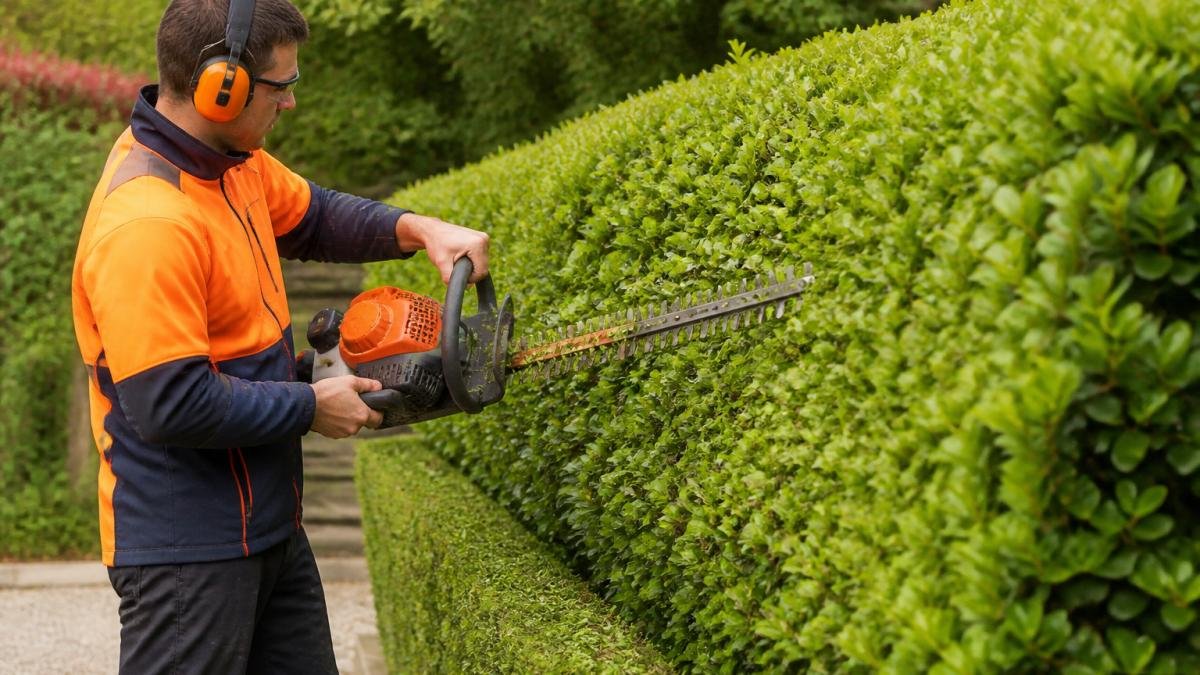
For established hedges, maintenance pruning keeps the shape whilst promoting new shoot development. The key is to cut just above a leaf node or bud, this is where new shoots will emerge. Avoid cutting into bare wood if possible; hedges respond best when you’re removing actively growing material.
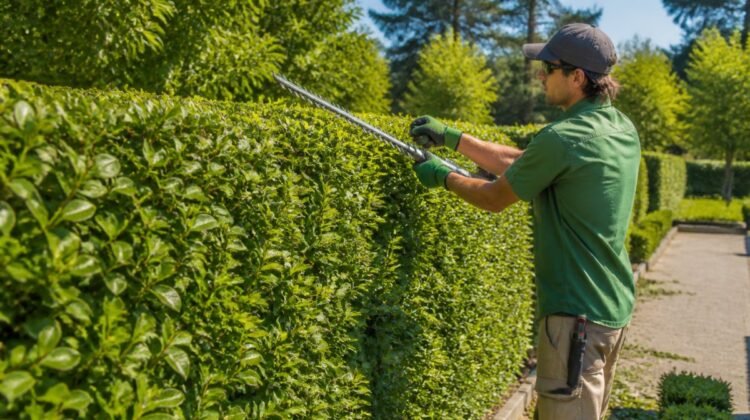
Hedge trimming techniques should always slope slightly outward from top to bottom, wider at the base than the top. This allows light to reach the lower branches, which encourages growth throughout the entire hedge rather than just the outer surface.
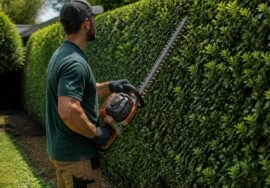
When using hedge trimmers or shears, maintain a steady, smooth motion rather than hacking at individual branches. Smooth cuts heal faster and look neater. For larger branches, use loppers or a saw rather than forcing hedge shears, which can crush stems and create entry points for disease.
How to Make a Hedge Grow Thicker and Fuller
Making a hedge grow thicker involves a combination of proper pruning technique, timing, and basic plant care. Start by removing any dead, diseased, or crossing branches, these don’t contribute to density and waste the plant’s energy. Then, cut back the remaining stems to encourage branching. The more you cut back (within reason), the more shoots the plant will produce.
Feed your hedge annually in spring with a balanced fertiliser or compost worked into the soil around the base. Better nutrition supports more vigorous growth and denser foliage. Water regularly during dry spells, especially for newly planted hedges; a stressed plant won’t put energy into thick new growth.
Mulching around the base of the hedge conserves moisture and keeps the root zone cool, which supports healthier growth. A 5-centimetre layer of organic mulch helps, but keep it away from the stem itself to prevent rot.
For hedges that have become sparse or thin, more aggressive rejuvenation pruning may be needed. This involves cutting back hard into older wood, sometimes by half or more. It’s a drastic step, but many species will regenerate from dormant buds even in apparently dead wood.
Preventing Disease and Pest Problems Through Regular Maintenance
Regular pruning lowers disease and pest pressure through three concrete mechanisms, not just a vague idea of ‘airflow’.
1. Faster leaf drying. Fungal spores need free moisture on the leaf surface to germinate.
2. Removal of the entry points. Dead, crossing, and rubbing branches are where pathogens and borers establish.
3. Breaking pest cycles. Aphids, scale, and mite populations build up in dense, sheltered growth. Thinning the canopy and removing infested tips interrupts that build-up before it becomes an outbreak, and a vigorous hedge outgrows minor damage.
Tool hygiene matters. Clean blades between plants, especially after working on a hedge with visible disease, using a cloth and a household disinfectant. This is the single cheapest way to avoid carrying pathogens from one hedge to the next.
Dispose of clippings properly. Diseased material should leave the site, not be left at the base of the hedge, where spores can splash back up. Healthy clippings can be chipped and composted; diseased material is better bagged and removed.
Balance with wildlife. A tightly clipped hedge is tidy but low in habitat value.
Never prune a hedge that is housing an active nest. Check before cutting, and delay that section until young have fledged.
For species-specific disease profiles, your state or territory agriculture department and local botanic gardens publish free fact sheets; a qualified arborist can also identify whether a browning patch is fungal, pest-related, or simply drought stress.
Getting Professional Hedge Pruning Support
For many homeowners and property managers, professional hedge pruning is the most reliable way to maintain healthy, dense hedges year-round. A qualified arborist understands species-specific requirements, knows the right timing for each type of hedge, and has the equipment and expertise to prune safely and effectively.
Trees Hedge and Stump Removal specialises in professional hedge pruning and maintenance for residential and commercial properties. Our highly skilled and qualified team can assess your hedge’s condition, recommend a tailored maintenance schedule, and execute formative or rejuvenation pruning as needed.
Professional pruning also means you get consistent results. Rather than an uneven trim that leaves some areas dense and others sparse, a trained arborist maintains uniform shape and encourages even growth across the entire hedge. For property managers overseeing multiple properties, outsourcing hedge maintenance ensures every site receives the same high standard of care.
You can explore professional hedge trimming services to learn more about how we approach maintenance schedules and what to expect from a professional trim. For those managing larger properties or complex hedging, review our hedging and trimming expertise to understand the full scope of work we undertake. If your hedge has become overgrown or neglected, discover our tree pruning capabilities, which extend to rejuvenation work on mature hedges.
Regular hedge pruning transforms your garden from a maintenance burden into a thriving landscape feature. The combination of proper timing, appropriate technique, and consistent care creates hedges that are denser, healthier, and more attractive year after year. Whether you’re managing a small residential hedge or overseeing multiple properties, a structured pruning plan delivers results.
| Pruning Approach | Frequency | Best For | Key Benefit |
|---|---|---|---|
| Formative pruning | Every 4-6 weeks (young hedges) | Establishing dense structure | Builds thick, compact framework |
| Maintenance pruning | 2-3 times per year | Formal, established hedges | Maintains shape and density |
| Annual pruning | Once per year | Informal or wildlife hedges | Encourages natural form and flowering |
| Rejuvenation pruning | Spread over 2-3 years | Overgrown or sparse hedges | Restores vigour and fullness |
Frequently Asked Questions
Why is regular hedge pruning important?
Regular hedge pruning encourages dense, healthy growth and maintains an attractive shape. It improves air circulation through the foliage, reducing disease risk and pest habitat. Pruning also controls height and width, keeps hedges looking neat, and prevents them from becoming overgrown and difficult to manage. For long-term garden health and structure, consistent maintenance is far more effective than attempting to renovate a neglected hedge.
How often should hedges be pruned?
Most hedges benefit from one to two cuts per year, depending on the species and growth rate. Fast-growing deciduous hedges may need two cuts during the growing season, while slower-growing evergreens often need just one annual trim. Timing matters: prune in late spring and late summer for most species. Young plants benefit from more frequent, light pruning to establish a dense framework early on, whereas established hedges need less frequent but more substantial maintenance.
Does regular pruning make a hedge grow thicker?
Yes. Regular pruning stimulates new shoot development and encourages bushier growth. When you cut back branches, the plant responds by producing fresh growth from dormant buds, creating denser foliage over time. This is why formative pruning of young hedges is so effective: consistent light cuts early on establish a thick, well-structured framework. Established hedges also thicken with regular maintenance, though the effect is more gradual than in young plants.
What is the best time to prune hedges?
Late spring and late summer are ideal for most hedges. Late spring pruning, after new growth appears, encourages a second flush of fresh shoots before winter. Late summer cutting keeps hedges tidy through autumn and winter. Avoid pruning during nesting season (typically September to February) to protect wildlife. Never cut hedges hard in late autumn or winter, as new growth may be damaged by frost. For evergreen species, timing is slightly less critical, but spring and summer remain safest.