How to Verify Arborist Insurance Before You Hire
Last Updated: October 28, 2026
Quick Summary
To verify arborist insurance, request a current certificate of currency and review the named insured, policy period, limits and exclusions line by line. Then contact the insurer or broker using the details on the certificate to confirm the policy is active and covers tree work at your address.
- Ask for a certificate of currency showing public liability and workers’ compensation cover before you agree to anything.
- The named insured and ABN must match the business quoting you, not a related entity.
- Confirm the policy period straddles your booked job date and request an updated certificate if it expires first.
- Check exclusions for work at height, chainsaw use, power lines and stump grinding before you hire.
- If subcontractors will attend, request and confirm a current certificate for each one.
Table of Contents
- Why Verifying Arborist Insurance Protects Your Property
- Step 1: Request Proof of Insurance and a Certificate of Currency From Your Arborist
- Step 2: Review the Certificate of Currency Arborist Document Line by Line
- Step 3: Contact the Insurer or Broker to Confirm Active Coverage
- Your Arborist Insurance Document Checklist for Every Quote
- Questions to Ask an Arborist Before Hiring for Tree Work
- What a Certificate Does Not Prove and How to Verify Subcontractors
- Book a Fully Insured Arborist With a Free Quote
- Frequently Asked Questions
Why Verifying Arborist Insurance Protects Your Property
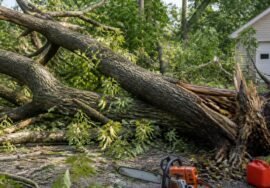
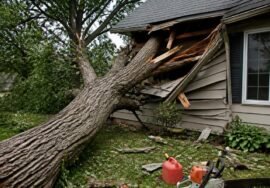
A tree can crush a fence, a shed, or a carport in seconds.
Arborist insurance is the cover a tree-care contractor holds to pay for property damage or injuries caused during tree work.
At Trees Hedge and Stump Removal, we’ve seen what happens when homeowners skip this step.
Here’s the uncomfortable truth most guides skip: a certificate is a snapshot, not a guarantee.
Step 1: Request Proof of Insurance and a Certificate of Currency From Your Arborist
Ask for the paperwork before you agree to anything. A legitimate tree service will send it without hesitation.
Request two things: a certificate of insurance and a certificate of currency. The second one is the Australian document that shows a policy is paid up and active on the date it’s issued.
A common mistake is accepting a verbal “we’re fully insured” over the phone. Get it in writing.
Here’s what to ask for in your first message:
- A current certificate of currency for public liability cover
- A current certificate for workers’ compensation
- The policy number and the insurer’s name
Watch out: a contractor who dodges this request or sends a blurry, undated document is a red flag. Move on.
Step 2: Review the Certificate of Currency Arborist Document Line by Line
Reading the certificate properly is where most people slip up. It takes two minutes and saves months of grief. Treat it as a field-by-field exercise, not a glance at the logo at the top.
Work down the page in this order. Each field answers a different question, and skipping one is how gaps slip through.
Field 1: The Named Insured
The named insured must match the business you are actually hiring. Check the exact legal name and the ABN, not just the trading name on the quote or the ute.
A common pattern is a certificate issued to a related company, a trust, or a sole trader rather than the entity quoting you. If the names do not line up, the cover may not respond to a claim arising from your job.
Field 2: The Policy Period
Confirm the effective date and the expiry date straddle your booked job date. A certificate that was current last month proves nothing about next week.
If the policy expires before your job, ask for an updated certificate of currency before work starts. Do not accept a promise that it will be renewed.
Field 3: The Insurer and Policy Number
Note the insurer’s name and the policy number exactly as printed. You will need both when you contact the insurer in Step 3. If the insurer is not one you recognise, that is not automatically a problem, but it is a reason to confirm directly rather than assume.
Field 4: Coverage Limits
Two numbers matter, and they are not the same:
- Per-occurrence limit: the most the insurer will pay for a single incident. This is the figure that applies to your job.
- Aggregate limit: the most the insurer will pay across all claims in the policy period. If the contractor has already made claims this year, the remaining aggregate may be lower than the headline figure.
Ask which limit applies to your job and whether any claims have reduced the aggregate. A contractor who cannot answer is a contractor who has not read their own policy.
Field 5: The Type of Cover
Check that the certificate lists the cover you expect:
- Public liability: the core cover for property damage and injuries to third parties, including you and your neighbours.
- Workers’ compensation: required where the contractor employs workers, and the cover that responds if a crew member is injured on your property.
- Products liability or contract works: relevant if the contractor supplies materials or undertakes larger projects.
If a cover type is missing from the certificate, ask why before you assume it is not held.
Field 6: Arborist-Specific Endorsements and Exclusions
This is the field most homeowners skip, and it is the one that decides whether your job is actually covered. Tree work carries risks that general policies often restrict.
Read the exclusions and endorsements for anything that rules out:
- work at height, including climbing and rope access
- chainsaw use and tree felling
- work near power lines or over structures
A policy can be current, have a healthy limit, and still exclude the exact activity you are hiring for. If the certificate is silent on these points, ask the arborist for the relevant policy wording or an endorsement that confirms tree work is included.
A certificate of currency is a summary, not the policy. It shows what the insurer has been told to confirm, not every condition attached to the cover. If a detail matters to your job, ask for it in writing.
Field 7: The Issue Date
Check when the certificate was issued. A recent issue date suggests the document reflects the current policy. An old one may predate a renewal, a cancellation, or a change in cover.
If cover expires before your booked date, ask for an updated certificate before work starts. If the issue date is more than a few months old, confirm the policy is still active in Step 3.
Step 3: Contact the Insurer or Broker to Confirm Active Coverage
The certificate alone doesn’t prove the policy is still active. The only way to confirm is to contact the issuing insurer or broker directly.
Use the contact details on the certificate, not the ones the contractor gives you. That closes the loop.
Ask three questions:
- Is this policy active today?
- Does it cover tree removal and pruning at my property?
- Is the named insured the business quoting me?
A broker can confirm coverage in minutes. This step is the one most homeowners skip, and it’s the one that actually protects you.
Your Arborist Insurance Document Checklist for Every Quote
Use this checklist for every quote you receive. It turns a vague worry into a clear yes or no.
| Document or Check | What to Confirm | Why It Matters |
|---|---|---|
| Certificate of currency | Issued date is recent and policy is current | Shows the cover is paid and active |
| Named insured | Matches the business quoting you | Prevents a cover mismatch |
| Policy period | Covers your booked job date | Avoids a lapsed policy |
| Public liability limit | Listed and adequate for the job | Covers property damage claims |
| Workers’ compensation | Current for all crew on site | Protects against injury claims |
| Arborist-specific cover | Tree work is included, not excluded | Confirms the job is covered |
| Insurer confirmation | Broker confirms active coverage | Proves the policy is real |
If you’re comparing quotes and want to understand what tree work typically costs, see our guide on tree removal costs in Melbourne.
Questions to Ask an Arborist Before Hiring for Tree Work
Good questions separate a professional from a chancer. Ask them before you book.
Start with the cover questions: “Can you send your certificate of currency today?” and “Who is your insurer?”
Then move to the work itself:
- Are you qualified to work near power lines?
- Who exactly will be on site, and are they employees or subcontractors?
- What happens if my fence or garden is damaged?
For a broader view of what to check, our guide to choosing a tree service covers the full buyer’s process.
What a Certificate Does Not Prove and How to Verify Subcontractors
A certificate proves a policy existed when it was issued. It does not prove the policy is still active, that premiums are paid, that the cover extends to your specific job, or that every worker on site is covered. Understanding that gap is what separates a real check from a paperwork ritual.
What a Certificate Does Not Prove
A certificate of currency is evidence of the cover described on its face. It is not the policy itself, and it is not a guarantee that a claim will be paid. Specifically, it does not confirm:
- that the policy is still in force on the day of your job
- that premiums are up to date
- that the insurer has been told about the type of work you are hiring for
That is why Step 3, contacting the insurer or broker directly, matters. The certificate tells you what to ask about. The insurer tells you whether it is true today.
How to Verify Subcontractors and Crews
Many crews bring in extra labour, and those workers may sit outside the contractor’s cover. A certificate that lists only the owner and not the crew can leave you exposed if a worker is injured on your property.
Ask directly before work begins: “Will any subcontractors be on my property?” If the answer is yes, work through this sequence:
- Get the names. Ask which subcontractors or labour-hire firms will attend, and on which days.
- Request their certificates. Ask for a current certificate of currency for each subcontractor, not a blanket assurance that “everyone is covered.”
- Check the named insured on each. The name on each certificate must match the entity actually sending workers to your site.
- Confirm workers’ compensation. If the subcontractor employs anyone, confirm workers’ compensation cover is current for those workers.
- Confirm with the insurer. Use the same direct-confirmation step you applied to the main contractor.
If a contractor cannot or will not identify subcontractors in advance, treat that as a warning sign. A professional operation knows who is on site and can produce the paperwork.
Handling Expired, Unclear, or Unverifiable Documents
Not every certificate arrives clean. Here is a decision path for the common problems:
- Expired policy: ask for a current certificate of currency. Do not accept a renewal promise. If a new certificate cannot be produced before the job date, postpone the work.
- Mismatched names: ask for a written explanation and, where relevant, an endorsement or letter from the insurer confirming the entity quoting you is covered. If that cannot be provided, treat the cover as unconfirmed.
- Blurry or undated document: ask for a clear, dated copy. A document that cannot be read cannot be verified.
The rule is simple: if you cannot confirm it directly with the insurer, treat the cover as unconfirmed. A cheap quote is not worth an uninsured incident on your property.
If you are weighing the risks of doing the job yourself, our article on the risks of DIY tree removal shows what can go wrong.
Book a Fully Insured Arborist With a Free Quote
Checking cover shouldn’t be hard, and you shouldn’t have to chase paperwork. We make it simple.
Trees Hedge and Stump Removal is a family-owned business with highly skilled and insured local arborists.
You can see our professional tree removal service or contact us for a free quote. We’ll walk you through our cover and answer every question on this list.
Frequently Asked Questions
What insurance should an arborist have?
An arborist working on your property should hold public liability cover for property damage and bodily injury, and workers’ compensation cover for anyone employed on the crew. Public liability protects you if a branch damages your house, fence or a neighbour’s property. Workers’ compensation matters because if an uninsured worker is injured on your land, you could face a claim. Ask for a certificate of currency that names the business and shows both covers are active before any tree work starts.
How can I confirm an arborist’s insurance is current?
Ask for a current certificate of currency, then call the issuing insurer or broker on the number listed on the document, not a number the arborist gives you. Quote the policy number and ask whether the policy is active, what it covers and whether tree removal or arborist activities are included. Check the policy period dates and confirm the named insured matches the business you are hiring. A certificate is only a snapshot, so this direct call is the step that confirms active coverage.
Does an arborist’s insurance cover damage to my property?
Public liability cover is the part that responds to property damage or bodily injury caused by the tree work, but whether a specific incident is covered depends on the policy terms, limits and exclusions. Ask the insurer to confirm that tree removal and arborist activities are covered and check the per-occurrence and aggregate limits. Keep your own photos and records of the worksite. If damage occurs, contact the arborist and their insurer promptly and retain all documentation.
What should I do if an arborist cannot provide insurance documents?
Do not let tree work begin. An arborist who cannot produce a certificate of currency, or whose insurer cannot confirm active cover, leaves you exposed to property damage and injury claims. Ask for the documents in writing and give a short deadline. If they still cannot provide them, choose another provider. A higher quote from a fully insured arborist is usually cheaper than repairing a damaged roof or fence yourself.
The next step is simple: ask for the paperwork, read it carefully, and confirm it with the insurer. If you want a crew that hands over its certificates without being asked, get started with Trees Hedge and Stump Removal and book a fully insured arborist with a free quote.