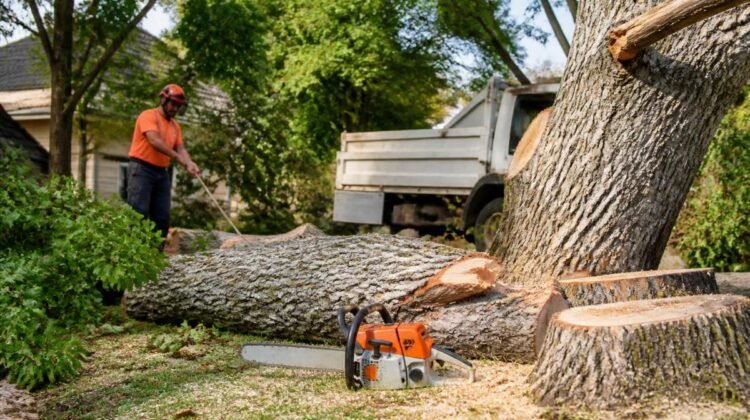
How to Choose a Tree Service: 2026 Buyer’s Guide
Table of Contents
- How to Choose a Tree Service: Start With the Job, Not the Price
- Verify Licensing, Insurance and Workers’ Compensation Before You Book
- How to Choose an Arborist With Real Qualifications
- Questions to Ask a Tree Removal Company Before Signing Anything
- What a Proper Tree Removal Quote Should Contain
- Permits, Protected Trees and Council Requirements
- Your Tree Removal Checklist: From First Call to Final Cleanup
- Frequently Asked Questions
Last Updated: October 20, 2026
How to Choose a Tree Service: Start With the Job, Not the Price
The cheapest quote is often the most expensive decision in tree work, a limb on the pergola or a “cash only” crew gone with half the job done.
The pattern is consistent: a homeowner rings three providers, takes the lowest number, and ends up paying twice. Tree removal is not a commodity, species, lean, proximity to structures, powerline clearance and access all change the work.
So before you call anyone, write down three things: what the tree is, what worries you about it, and what outcome you want.
Safe Work Australia guidance on tree work and falling objects
Photograph the tree from four angles and note the distance to your house, fence and any overhead lines. Providers quote faster and more accurately when you send images upfront, and you get fewer “we’ll need to come out and see” delays.
Verify Licensing, Insurance and Workers’ Compensation Before You Book
Ask for a certificate of currency for public liability insurance and workers’ compensation coverage before anyone sets foot on your property.
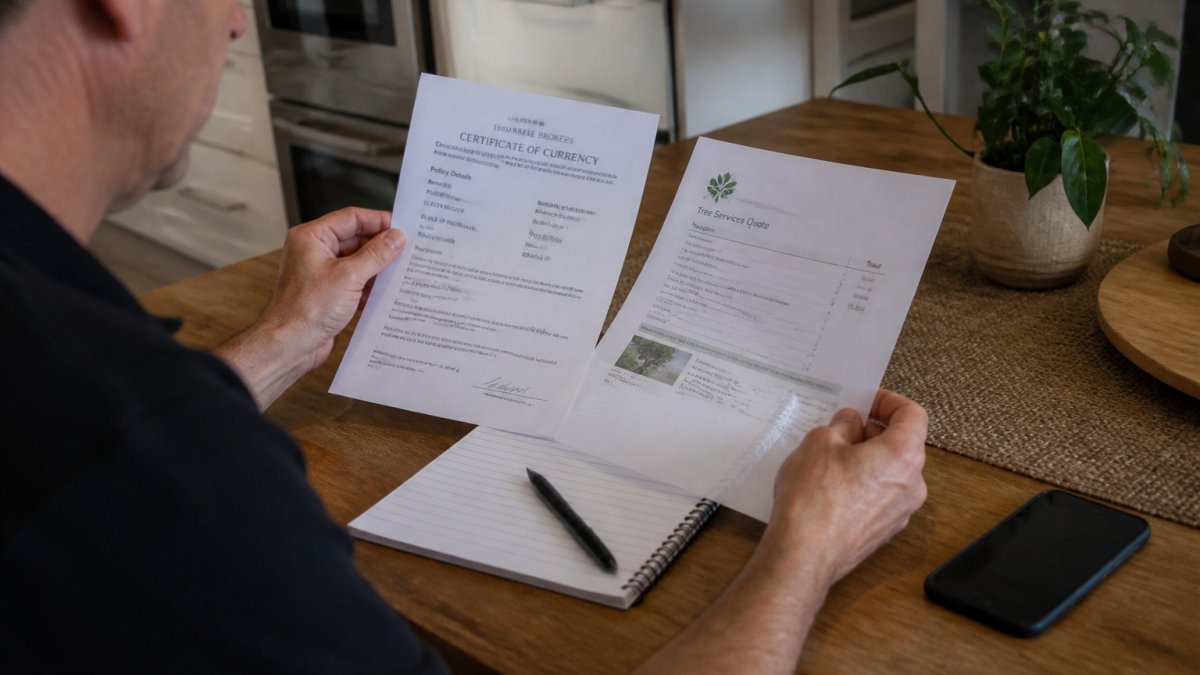
A verbal “we’re fully insured” means nothing.
Public liability insurance covers damage to your property or injury to a third party. Workers’ compensation insurance covers the crew if someone is hurt on your site.
Don’t accept a screenshot of a policy instead of the certificate of currency. Certificates carry dates, policy numbers and insurer names you can verify.
How to Choose an Arborist With Real Qualifications
A qualified arborist holds formal training in tree biology, pruning standards and risk assessment, not just a chainsaw and a ute.
Ask directly what qualification the person assessing your tree holds. A certificate-level arboriculture qualification is the baseline for anyone advising on tree health or structural risk.
Watch for these signals:
- They ask about the tree’s history, not just its size
- They explain why a tree needs removing versus pruning
- They mention species-specific behaviour and seasonal timing
- They can describe the pruning standard they will follow
If a provider cannot explain why a particular cut is being made, they are a labourer with a chainsaw, not an arborist.
Never let anyone climb with spikes on a tree you intend to keep. Climbing spikes wound the trunk and create entry points for disease. Spikes belong on removals only, never on pruning jobs.
Questions to Ask a Tree Removal Company Before Signing Anything
The right questions to ask a tree removal company separate a professional operation from a crew that will improvise. Ask before you sign, and listen for specifics.
- Who will be on site, and what are their qualifications?
- How will you protect the fence, garden beds and driveway?
- What equipment will you use, and is there access for it?
- How is the green waste and debris removed, and is that included?
- What happens if the job takes longer than quoted?
- Are there any council approvals required for this tree?
- What is your process if something is damaged during the work?
- Can you show me a certificate of currency for public liability and workers’ compensation?
- What is your payment schedule, and what are the cancellation terms?
- Will you provide a written scope and a written agreement before work starts?
A provider who answers these without flinching has done the job many times; one who deflects or rushes you is a risk. A discount that expires today is a red flag, legitimate tree care does not run on door-knocker urgency.
ACCC guidance on unsolicited sales and your rights
Emergency work and storm-damaged trees
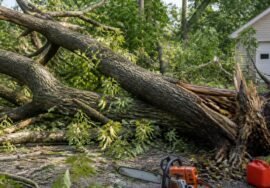
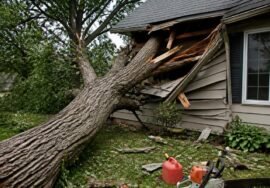
Storms create a different hiring problem. Demand spikes, crews are stretched, and unqualified operators appear overnight offering to “make it safe” for cash.
Treat a tree as urgent if it is leaning onto a structure, has a split trunk or hanging limb over a path or driveway, is blocking access, or is touching or near powerlines.
During a storm period, still ask for the certificate of currency and a written scope before work starts, a legitimate emergency crew will provide them; a storm-chaser will not.
Never let anyone climb with spikes on a tree you intend to keep. Climbing spikes wound the trunk and create entry points for disease. Spikes belong on removals only, never on pruning jobs.
Tree preservation alternatives
Not every worrying tree needs removing. Ask whether pruning, cabling, bracing or a treatment program could manage the risk instead. A qualified arborist should explain the trade-offs, cost, longevity, risk reduction, ongoing maintenance, rather than defaulting to removal. If a provider recommends removal without explaining why pruning or cabling is unsuitable, get a second opinion.
What a Proper Tree Removal Quote Should Contain
A written tree removal quote should itemise the scope of work, not just state a total. If the quote is a single number on a business card, ask for a proper document.
Here is what a complete quote includes:
| Quote element | What to check |
|---|---|
| Tree identification | Species and size stated, not just “the big one” |
| Scope of work | Removal, pruning or stump grinding specified |
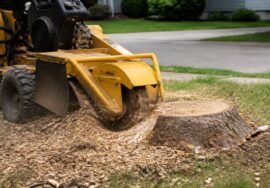
| Stump treatment | Grinding depth and root removal stated |
| Debris removal | Green waste disposal included or excluded |
| Site protection | Fencing, matting or drop zone noted |
| Insurance details | Certificate of currency attached |
| Payment terms | Deposit amount and timing in writing |
| Timeline | Start date and expected duration |
The scope of work is where cheap quotes hide their savings. A low number often excludes stump grinding, green waste removal or the traffic management needed near a road.
How to compare quotes side by side
Write a single scope statement and send the same wording to every provider. Something like: “Remove one 12-metre eucalypt within 3 metres of the rear fence, grind the stump to 300 mm below ground, remove all green waste, protect the lawn and fence, and provide a certificate of currency for public liability and workers’ compensation.” When every provider quotes the same words, price differences reflect real differences in approach.
Then build a simple comparison sheet with one column per provider and these rows:
- Scope match, does the quote repeat your scope statement, or quietly narrow it?
- Exclusions, stump grinding, root removal, green waste, traffic control, permit fees, arborist report.
- Disposal, is green waste taken away, chipped on site, or left for you?
- Site protection, fencing, matting, drop zone, and who repairs damage to lawn or paving.
- Crew and equipment, number of workers, qualifications, elevated work platform or climbing, chipper size.
- Timeline, start date, duration, and what happens if weather delays the job.
A quote that is 20 per cent cheaper but excludes stump grinding and green waste removal is not cheaper once you price those back in. The goal is the lowest number for the same scope, not the lowest number.
A quote is only comparable if the scope matches. Ask every provider to quote the same written scope, then compare prices line by line. Apples to apples, the cheapest quote is rarely the best value.
Contract terms, deposits and payment safeguards
A written quote is not a contract. Before work starts, ask for a written agreement setting out the scope, price, payment schedule, dates, and what happens if the job changes. Read the cancellation terms, a deposit should be modest and tied to booking a date. Pay by traceable method, keep receipts, and never pay in full before the job is complete and you have walked the site.
ACCC guidance on contracts and unfair terms
Permits, Protected Trees and Council Requirements
Many trees cannot be removed without council approval, and cutting first can mean a fine. Before booking removal, check whether your tree is protected by a planning overlay, significant tree register or local tree protection bylaw.
Council requirements vary by area, so your neighbour’s rule may not apply to you.
Two situations catch homeowners out:
- Heritage or significant trees, which may require a permit and an arborist report before any work
- Storm-damaged trees, where emergency provisions can allow immediate make-safe work but not full removal without approval
Get any approval in writing before work begins. Victorian government planning guidance on native vegetation and tree controls
Your Tree Removal Checklist: From First Call to Final Cleanup
Use this tree removal checklist to run the whole job from first enquiry to final sweep of the driveway.
Before you book:
- Define the job: species, size, location, access
- Request certificates of currency for public liability and workers’ compensation
- Confirm arborist qualifications for the person assessing the tree
- Ask about council requirements and protected tree status
- Get at least three written quotes using the same scope
- Compare quotes line by line, not on total price
- Check reviews and ask for references from similar jobs
On the day:
- Confirm the crew and equipment match the quote
- Check site protection is in place before cutting starts
- Confirm the drop zone and exclusion area with the crew
- Note any pre-existing damage to fences or paving
After the job:
- Walk the site with the crew lead before they leave
- Confirm stump grinding depth and root removal
- Check green waste and debris are fully removed
- Confirm final cleanup of the driveway and lawn
- Get a receipt and any warranty or follow-up details in writing
A provider who welcomes this checklist is worth hiring.
Standards Australia guidance on arboriculture and tree work
Choosing a tree service is a test of patience: the provider who answers thoroughly and puts everything in writing is almost always the one who does the job properly. If you are weighing up a risky removal, a storm-damaged tree or ongoing maintenance, get a free quote from Trees Hedge and Stump Removal.
Frequently Asked Questions
What qualifications should a tree service provider have?
Look for a certificate III in arboriculture or higher, plus membership of a recognised professional body. A certified arborist can assess tree health and species, while general labourers cannot. Ask who will actually climb or operate the equipment on the day, because the person quoting is not always the person doing the work. Also confirm current public liability insurance and workers’ compensation cover, and check the policy dates rather than accepting a verbal assurance.
What should a tree removal quote include?
A written tree removal quote should list the scope of work: which trees, how many, removal method, stump grinding depth, green waste disposal and final cleanup. It should state whether permits are included, what happens to the timber, and any exclusions such as power line work. Ask for the quote in writing with the business name, ABN and insurance details. Compare scope before price, because a cheaper quote often leaves debris, excludes the stump or omits permit costs.
How can I check whether a tree service is insured?
Ask for a certificate of currency for public liability and workers’ compensation, then confirm the policy is current and the business name matches the quote. Call the insurer if anything looks unclear. Public liability covers damage to your property, such as a fence or garden bed, while workers’ compensation covers the crew if someone is injured on your site. If a provider cannot produce paperwork quickly, treat that as a warning sign and keep comparing contractors.
Should I get more than one quote for tree work?
Yes. Get at least three written quotes for anything beyond minor pruning. Multiple quotes give you a price comparison and reveal differences in scope, equipment and safety practices. Prices vary with access, tree height, proximity to structures and disposal costs, so a large gap usually reflects a different scope rather than a better deal. Ask each provider to itemise the same tasks so you can compare like for like.
When should I hire an arborist rather than a general tree service?
Hire an arborist when the question is about tree health rather than removal: disease, dieback, structural defects, or a protected species you want to keep. A certified arborist can recommend tree-preservation alternatives such as pruning, cabling or treatment before removal is considered. For straightforward removals and stump grinding, a qualified tree service with insured crews is usually enough, provided they can show the credentials and safety practices covered in this guide.
How much does it cost to remove a tree in Australia?
Pricing depends on tree height, species, access, proximity to power lines and buildings, stump grinding and green waste disposal. Large gum trees near structures cost more than small ornamentals in open yards. Rather than relying on a headline figure, request an itemised tree removal quote and compare scope across providers. Ask whether the fee includes permits, debris removal and final cleanup, since these extras often explain price differences between quotes.