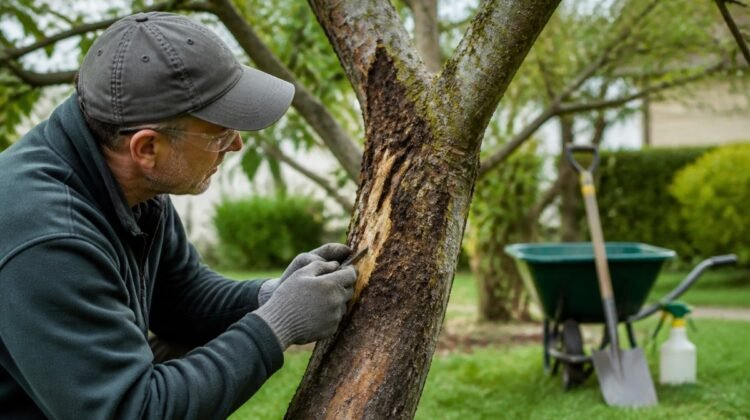
Managing Diseased Trees in Gardens: A Step-by-Step Guide
Table of Contents
- Recognising Tree Disease Symptoms Early
- How to Treat a Diseased Tree: Initial Steps
- Diseased Tree Pruning: Techniques and Timing
- When to Remove a Diseased Tree
- Managing Diseased Trees Through Preventative Care
- Disposal of Infected Plant Material
- Common Mistakes to Avoid
- Conclusion
- Frequently Asked Questions
Last Updated: October 21, 2026
Recognising Tree Disease Symptoms Early
The first step in managing diseased trees is spotting the problem early, giving you the best chance to save a tree or stop the disease spreading.
Common signs of fungal infections and pathogens vary by disease.
Fungal infections spread through spores carried by wind, water or soil. Once spores land, they germinate and infect the vascular system (the tubes that move water and nutrients through the tree).
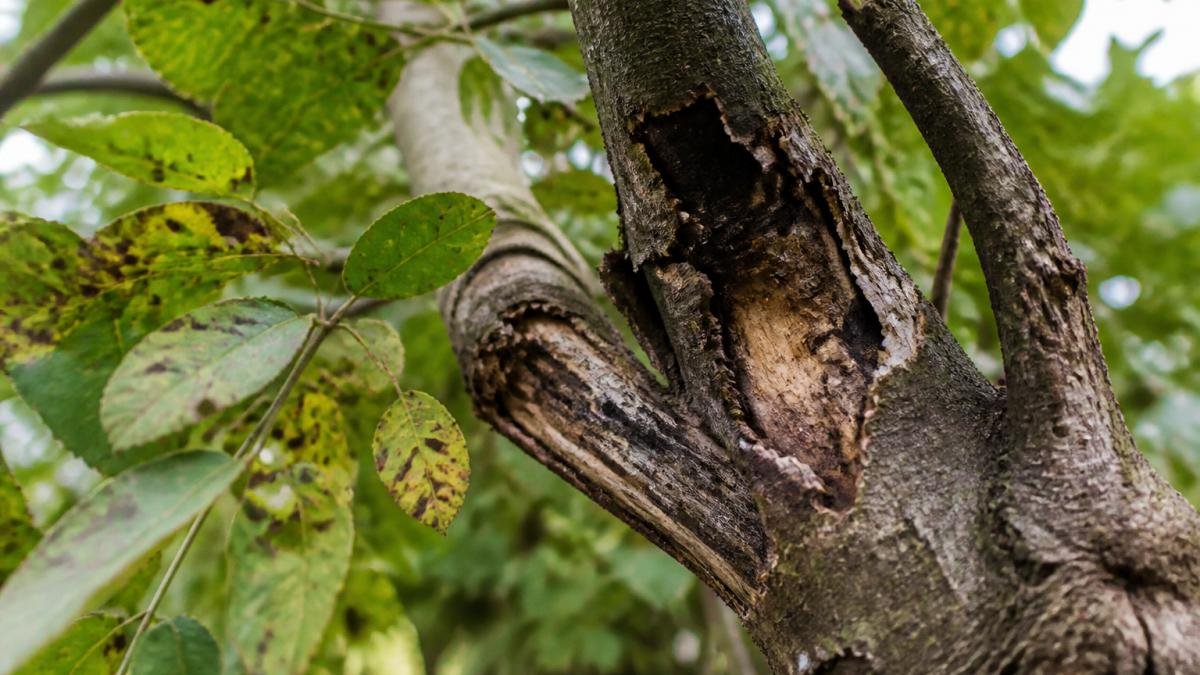
Identifying soilborne diseases and root rot means looking below ground. These pathogens live in soil and infect roots directly. Root rot is among the most serious, destroying the tree’s ability to absorb water and nutrients. Signs include:
- Tree leans or becomes unstable
- Sudden wilting even after rain
- Soft, mushy wood when you probe the base
- Foul smell near the roots
- Mushrooms or fungi growing at the base
Stubble-borne diseases come from infected plant material left in soil.
Compacted soil, poor drainage and waterlogged roots create perfect conditions for pathogens, so trees in heavy clay or poorly draining areas are at higher risk.
Dig down 30 centimetres near the base and feel the soil. If it’s soggy or smells sour, drainage is your first problem to fix. Poor drainage kills more trees than disease alone.
How to Treat a Diseased Tree: Initial Steps
Once you’ve identified disease, your next move depends on how far it’s progressed. Early intervention can save many trees. Advanced infection often requires removal.
Assessing the extent of infection tells you whether the tree can recover or removal is safer. Here’s how to evaluate:
Check what percentage of the canopy is affected: under 25 percent and the tree has a reasonable chance; over 50 percent and recovery is unlikely. If the disease has girdled the trunk (wrapped around and cut off the vascular system), the tree will die.
Test the branch integrity. Snap a small twig. Healthy wood is flexible and green inside. Diseased wood is brittle, discoloured, or mushy.
Consider age and value: a 50-year-old heritage tree is worth more effort than a young sapling. Position matters too, a diseased tree near your house or power lines may force removal regardless.
Organic versus chemical treatment protocols differ in approach. Organic methods support tree health and manage pathogens without synthetic fungicides; chemical treatments use registered fungicides to kill pathogens directly.
Organic approaches include:
- Improve drainage and soil health with mulching
- Prune out infected branches (sanitation)
- Apply biological fungicides like Bacillus subtilis
- Increase air circulation through canopy thinning
- Avoid overhead watering (water at the base instead)
Chemical treatments use registered fungicides. They work faster but require careful application. Systemic fungicides are absorbed and distributed throughout the tree; contact fungicides coat the surface.
The choice depends on disease type, tree value and your preferences. Many trees respond well to organic methods plus good sanitation; severe infections may need chemical intervention.
Early-stage infections caught within the first few weeks respond well to organic methods. Advanced infections typically need chemical fungicides or removal.
Diseased Tree Pruning: Techniques and Timing
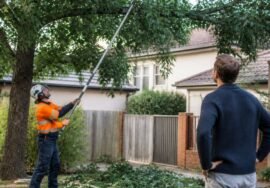
Pruning is one of your most important tools for managing diseased trees. Done correctly, it stops disease spread.
Safe pruning methods to prevent pathogen spread start with sharp tools, dull blades crush branches and create wounds that invite infection.
Remove all infected branches. Cut at least 15 centimetres below the visible infection to ensure you remove all diseased tissue.
Avoid tearing bark by supporting the branch weight as you cut. For large branches, use the three-cut method:
- Cut from underneath, halfway through the branch, about 30 centimetres from the trunk
- Cut from the top, just beyond the first cut, until the branch falls
- Cut the remaining stub just outside the branch collar
Never apply wound dressing or sealant. Trees heal better when exposed to air. Sealants trap moisture and can actually encourage rot.
Canopy thinning and structural integrity improve tree health and reduce disease risk.
Thin by removing up to 25 percent of the canopy in a single season. Remove branches in this priority order:
- Dead or dying branches
- Diseased branches
- Crossing or rubbing branches
- Branches growing inward
- Weak branches with narrow angles
Maintain the tree’s natural shape. Don’t top trees (cutting the main trunk), this creates large wounds and triggers weak, bushy regrowth.
Structural pruning improves wind and storm resistance.
Never remove more than 25 percent of living canopy in one season. Over-pruning stresses the tree and can actually trigger disease. Spread major pruning over multiple years if needed.
When to Remove a Diseased Tree
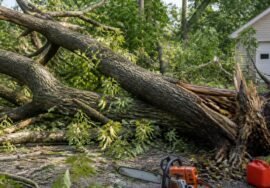
Sometimes removal is the best option. A tree that’s dying, poses a safety hazard, or is spreading disease to other plants should come down.
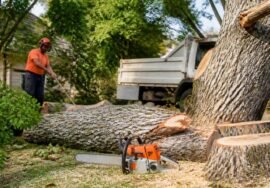
DIY versus professional intervention thresholds help you decide whether to handle removal yourself or call in specialists. Trees Hedge and Stump Removal handles the complex cases that require professional equipment and expertise.
Remove a tree yourself only if:
- It’s under 5 metres tall
- It’s not near power lines, fences, or structures
- It has a clear, open space to fall safely
- You have proper equipment (chainsaw, safety gear)
- Local regulations allow it
Call a professional arborist if:
- The tree is over 5 metres tall
- It’s near power lines, buildings, or fences
- It’s in a confined space with limited fall zone
- The trunk diameter is over 30 centimetres
- You’re unsure about the hazard
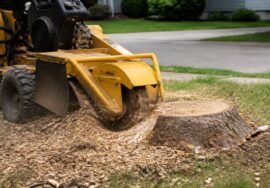
Professional arborists have insurance, safety equipment and experience with complex removals, plus stump grinding and proper wood disposal.
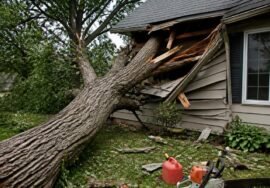
Hazard assessment and safety considerations are crucial. A diseased tree becomes a hazard when it can no longer support its own weight safely. Signs include:
- Large dead branches that could fall
- Trunk lean (the tree tilts from vertical)
- Visible cracks or splits in the trunk
- Hollow sections in the trunk
- Root failure (tree leans or rocks in wind)
Even if a tree isn’t visibly hazardous now, advanced disease can cause rapid failure. A tree with 70 percent canopy loss or extensive root rot can fail without warning.
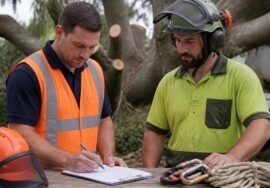
If you’re unsure, have a professional hazard assessment done. It costs less than the damage a falling tree could cause.
Homeowners with trees showing advanced disease symptoms, trees near structures or power lines, or trees over 5 metres tall should always use professional removal services.
Managing Diseased Trees Through Preventative Care
The best strategy is prevention. Healthy trees resist disease far better than stressed ones. Preventative care keeps your garden safer and saves money long-term.
Soil management, mulching, and biosecurity form the foundation of disease prevention.
Biosecurity means preventing disease entry: don’t move soil or plants from infected to clean areas, sterilise tools between trees, and remove windfall promptly since it harbours pathogens.
Water at the base of trees, not overhead. Wet foliage creates conditions for fungal spores to germinate. Morning watering is better than evening, leaves dry faster in daylight.
Selecting disease-resistant tree species reduces your risk. Some species are naturally resistant to common diseases. For Melbourne gardens, consider:
- River red gum (resistant to many fungal diseases)
- Lemon-scented gum (good disease resistance)
- Spotted gum (hardy and disease-resistant)
- Acacias (generally strong)
Avoid planting the same species repeatedly in the same location. Monoculture increases disease risk because pathogens specific to that species build up in soil over time.
Choose species suited to your soil and climate.
When replanting after tree removal, choose a different species if possible. This breaks the disease cycle for soilborne pathogens specific to the removed tree.
Disposal of Infected Plant Material
Improper disposal of diseased branches and wood spreads pathogens to other areas.
Never leave infected material in a pile in your garden, where spores spread in wind and water. Don’t chip diseased wood for mulch or compost it at home (home compost doesn’t reach temperatures high enough to kill most pathogens).
Your options are:
- Green waste bin: If your local council accepts diseased material in green waste, this is the easiest option. Council facilities heat compost to temperatures that kill pathogens.
- Burn pile: If local regulations allow burning, this is effective. Burn material completely so no infected pieces remain.
- Bury deeply: Bury infected material at least 60 centimetres deep, away from other plants and water sources.
- Professional disposal: Trees Hedge and Stump Removal can remove and dispose of infected material properly.
Check your local council’s rules on green waste before assuming diseased material is accepted. Some councils have restrictions during disease outbreak periods.
If you grind the stump of a diseased tree, the chips can be used as mulch in that same location (the pathogen is already there). Don’t move chips to other parts of your garden.
Common Mistakes to Avoid
Mistake 2: Over-pruning. Removing too much canopy stresses the tree and can trigger disease. Stick to the 25 percent rule.
Mistake 3: Leaving stubs or applying wound dressing. Stubs don’t heal and become infection entry points. Wound dressing traps moisture and can encourage rot.
Mistake 4: Ignoring soil drainage. Most tree diseases thrive in wet soil. If you don’t fix drainage, treating the disease above ground won’t help. Address soil first.
Mistake 5: Spreading pathogens with dirty tools. Using the same saw on multiple trees without sterilising spreads disease. Clean between cuts.
Mistake 6: Planting the same species in the same spot. Soilborne pathogens persist in soil for years. Replanting the same species invites re-infection.
Mistake 7: Moving infected material around your garden. Don’t chip diseased wood and mulch other areas. Don’t compost it in a home bin.
Conclusion
Managing diseased trees requires early detection, proper assessment, and the right intervention at the right time. Some trees can be saved with pruning, soil improvement, and careful treatment. Others need removal to prevent hazards and disease spread.
The key is acting quickly. A tree showing early disease symptoms can often be saved. A tree in advanced decline usually needs removal.
If you’re unsure whether your tree can be saved, or if removal is needed, get a professional assessment. Trees Hedge and Stump Removal offers free quotes and expert advice on managing diseased trees, professional pruning, safe removal, and stump grinding. Our qualified arborists have handled thousands of diseased trees across Melbourne. We’ll help you make the right decision for your property and your garden’s health.
Australian Arboricultural Association guidance on tree health assessment
Frequently Asked Questions
How can I tell if a tree in my garden is diseased?
Look for visible signs including leaf discolouration, spots, premature defoliation, cankers on the trunk, oozing sap, or dieback of branches. Root rot often causes wilting despite adequate watering, whilst fungal infections may show white or dark growth on bark or leaves. Early-stage infection can be subtle, so monitor your trees regularly during growing seasons. If you’re unsure, photograph the affected areas and consult an arborist for accurate identification.
What’s the difference between organic and chemical treatments for diseased trees?
Organic treatments use natural fungicides, pruning, and improved soil management to control pathogens without synthetic chemicals. Chemical protocols involve registered fungicides applied according to label directions and are often more effective for severe infections. Organic methods suit mild infections and preventative care but may require repeated application. Chemical treatments work faster for advanced disease but require careful handling. Your choice depends on infection severity, tree value, and your environmental preferences. Consult an arborist to determine the best approach for your situation.
When should I call a professional arborist about a diseased tree?
Contact an arborist immediately if disease affects a large tree, threatens nearby structures, involves hazard assessment near power lines, or if you’re uncertain about identification. Early professional intervention prevents disease spread through integrated pest management strategies. If the tree shows signs of structural failure or poses safety risks, professional evaluation is essential. Arborists can confirm pathogen type, recommend treatment, and determine whether removal is necessary. For minor infections on small trees, you may manage pruning yourself, but professional guidance ensures you don’t worsen the condition.
Can a diseased tree recover without treatment?
Some trees recover from mild infections through natural defence mechanisms, but most diseased trees require intervention to prevent progression. Early-stage infections respond well to pruning, sanitation, and improved growing conditions. Advanced infections with significant vascular system damage rarely recover fully without treatment. Untreated disease spreads to other plants through spores and soilborne pathogens, risking your entire garden. Even if a tree appears to recover, monitoring continues as dormant pathogens can reactivate. Professional assessment determines whether your tree can recover or requires removal.