5 Factors That Determine Professional Stump Grinding Cost
Last Updated: October 26, 2026
Quick Summary
Professional stump grinding cost varies based on stump diameter, tree species, grinding depth, site access, and whether you have multiple stumps. Larger stumps and hardwood species cost more, while multiple stumps on the same property reduce the per-stump price.
- Stump diameter is the single biggest cost driver, with larger stumps taking significantly longer to grind.
- Most jobs grind to a depth of between 200 and 300 millimetres below ground level, but deeper grinding costs more.
- Hardwood stumps like oak and elm wear equipment faster and may incur a surcharge.
- Restricted site access due to fences, sheds, or utilities adds time and labour costs.
- Multiple stumps on one property reduce per-stump cost by spreading the call-out fee across more work.
Table of Contents
- Understanding Professional Stump Grinding Cost
- Stump Grinding Cost Factors That Shape Your Quote
- How to Get an Accurate Stump Grinding Quote
- Stump Grinding Versus Stump Removal: Cost and Process
- What to Do After Stump Grinding
- Getting Your Free Stump Grinding Quote
- Frequently Asked Questions
Understanding Professional Stump Grinding Cost
When a tree comes down, the stump remains, and removing it becomes your next challenge. Professional stump grinding cost varies dramatically depending on what you’re grinding, where it sits, and how deep you need to go. At Trees Hedge and Stump Removal, we help property owners understand what drives these costs so they can budget accurately and avoid surprises.
The price you’ll pay for stump grinding cost isn’t a fixed number. It depends on factors ranging from the stump’s diameter to the species of tree that once stood there. Understanding these variables helps you compare quotes fairly and know whether you’re getting fair value.
Stump Grinding Cost Factors That Shape Your Quote
Stump diameter is the single biggest cost driver. A small stump 150 millimetres across costs far less to grind than one that’s 1 metre wide. The grinding depth also matters; most jobs grind to a depth of 200 to 300 millimetres below ground level, but some require deeper work.
Here’s what shapes your quote:
Stump diameter and depth
The larger the stump, the longer the job takes and the more wear on equipment. A stump under 300 millimetres wide typically costs less than a medium stump between 300 and 600 millimetres. Large stumps over 600 millimetres demand significantly more time and fuel.
Grinding depth affects cost too. Most professionals grind 200 to 300 millimetres below ground level, which lets you replant or reseed the area. Deeper grinding, when you need the entire root system destroyed, takes longer and costs more.
Tree species and wood hardness
Softwood stumps like pine grind quickly. Hardwood stumps like oak, elm, or gum are denser and wear down equipment faster. Some providers add a hardwood surcharge because the work is tougher on machinery.
The species also determines how aggressive the grinding needs to be. Some woods splinter easily; others resist the grinder’s teeth and slow progress.
Site access and terrain
A stump in an open backyard is straightforward. A stump wedged between a fence and a garden shed is not. Restricted access means the operator can’t position the grinder optimally, which adds time and labour.
Terrain matters too. Soft, muddy ground can bog down heavy equipment. Hard-packed earth or gravel is easier to work on. Sloped yards or uneven surfaces complicate positioning.
Multiple stumps and call-out fees
Grinding one stump is one job. Grinding five stumps on the same property is often cheaper per stump because the operator is already on site and doesn’t need to travel again. A call-out fee, the minimum charge just to show up, applies to some jobs. Multiple stumps let you spread that fixed cost across more work.
How to Get an Accurate Stump Grinding Quote
A proper quote breaks down what you’re paying for. It should list the stump diameter, the grinding depth, any hardwood surcharges, the call-out fee, and cleanup costs if applicable.
When you contact a provider, have these details ready:
- Number of stumps
- Approximate diameter of each stump (measure across the widest part)
- Tree species if you know it (oak, pine, gum, etc.)
- Site access: Is the stump in an open yard or blocked by fences, sheds, or utilities?
- How deep do you need it ground? Standard (200-300 millimetres) or deeper?
- Do you want the chips removed or left on site?
How to measure a stump correctly
Measure across the widest point of the stump at ground level, not at the top of the cut. A stump that looks narrow at the top can flare out below the soil line, and that flare is what the grinder has to cut through. If the stump is irregular or has buttress roots, measure the widest span and tell the provider it’s irregular; they may quote on the larger dimension. Where a stump has been cut high, the visible height also adds time because the operator has more material to remove before reaching ground level.
Why a small stump can still attract a minimum charge
Some providers set a minimum call-out fee that covers travel, setup, and the first block of grinding time. A 150-millimetre stump in an open yard may take only minutes to grind, but the operator still has to load the machine, travel, unload, and pack up. That fixed cost is why a tiny stump can be quoted close to the minimum rather than at a per-inch rate. Ask whether the minimum applies per visit or per stump.
A checklist for comparing quotes fairly
Two quotes for the same stump can differ because they cover different work. Compare them on these points before deciding:
- Stump diameter, is each provider quoting on the same measurement?
- Grinding depth, 200 millimetres, 300 millimetres, or deeper? Deeper costs more but may be needed for replanting.
- Cleanup scope, are chips left in a pile, spread across the site, or hauled away?
- Disposal terms, is chip removal included or charged separately?
- Access assumptions, has the provider seen the site, or is the quote based on your description?
- Minimum charge, is it stated, and does it apply once or per stump?
- Surcharges, hardwood, difficult access, or out-of-hours work?
A quote that looks cheaper on the headline number can cost more once cleanup and disposal are added. Ask each provider to confirm the same scope in writing so the comparison is like for like. Get a professional stump grinding quote from Trees Hedge and Stump Removal to see how pricing breaks down for your specific site.
Stump Grinding Versus Stump Removal: Cost and Process
Stump grinding and stump removal are different jobs with different costs.
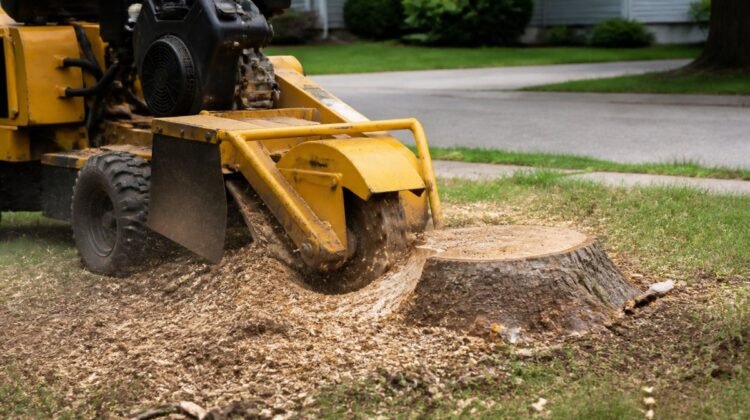
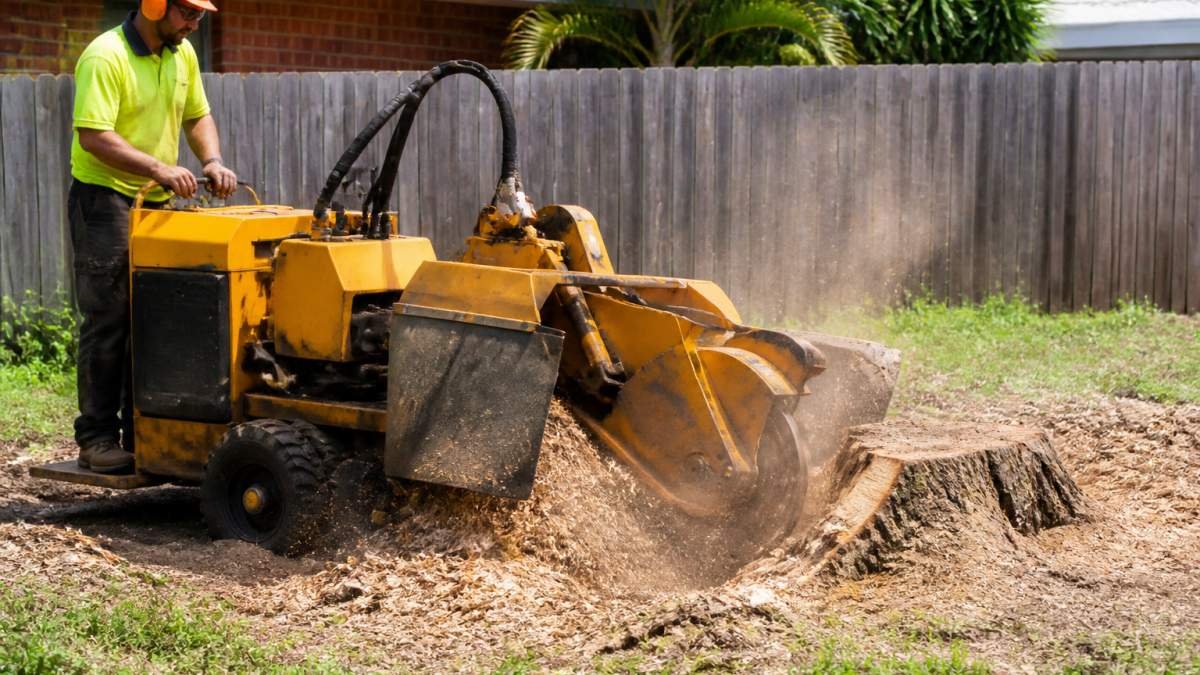
Grinding grinds the stump down to below ground level using a rotating cutting wheel. Roots stay in the soil but decay over time. The area is left with wood chips and can be replanted within weeks.
Removal pulls the entire stump and root system out of the ground. It’s more invasive, takes longer, and costs more. Removal leaves a hole that needs backfilling. It’s necessary when you want the space cleared completely or when roots are damaging property.
For most homeowners, grinding is the practical choice. It’s faster, less disruptive, and leaves the soil structure intact. Learn more about stump removal and grinding services to compare what suits your property best.
What to Do After Stump Grinding
Once the stump is ground, you’re left with a depression filled with wood chips. The site isn’t “finished”, it needs planning.
What the site looks like immediately after
Grinding leaves a hole roughly the shape of the stump, filled with a mix of wood chips and soil. The chips are usually left on site unless you’ve paid for removal. Expect the chip pile to sit slightly proud of ground level; it will settle as it breaks down.
Within the first week:
- The chips will settle as they break down
- The ground will compress slightly
- Leave the area undisturbed so settling is even
After 2-4 weeks:
- The chips will have begun decomposing
- You can rake them smooth or remove them if you prefer
- The soil is ready for replanting or reseeding
Backfilling the hole
If you want the ground level, top up the depression with fresh topsoil rather than more chips. Chips alone continue to sink as they decompose, so a chip-only fill will leave a dip within a season. A common approach is to remove some of the chips, backfill with topsoil, and firm it lightly in layers. Leave a slight mound; it will settle flush after watering.
For replanting:
- Add fresh topsoil over the ground if you want to plant shrubs or trees
- For grass, rake the chips level and seed directly
- Water regularly for the first month
Replanting considerations
If you’re planting a new tree in the same spot, remember that the old root system is still decaying underground. Fresh chips mixed into the soil can temporarily tie up nitrogen as they break down, so mix in compost or aged organic matter before planting. For turf, a thin layer of topsoil over the levelled chips gives seed a better bed than seed sown straight onto chips.
Chip removal:
- If you don’t want the chips left on site, ask your provider to haul them away
- Some providers include this; others charge extra
- Chips can be useful for mulch in garden beds if you want to keep them
Using the chips
Wood chips make good mulch for garden beds, around shrubs, and on paths. Fresh chips are best aged or composted before use around young plants. Keep chips clear of building foundations and don’t mound them against fence posts, where they can hold moisture.
Getting Your Free Stump Grinding Quote
Understanding the cost of professional stump grinding starts with a conversation about your specific situation. Every property is different; stump size, access, soil type, and what you want done after all affect the final price.
Trees Hedge and Stump Removal provides free quotes so you can see exactly what the work involves and what it will cost. Learn how to choose a qualified tree service provider before booking your stump grinding appointment. We’ll measure your stump, assess site access, identify the tree species, and give you a clear breakdown.
Book a stump grinding quote or learn how we approach pricing for tree services to understand what shapes the cost of professional stump grinding. We’re ready to help you get the stump out and your property back to usable condition.
| Factor | Impact on Cost | What to Watch |
|---|---|---|
| Stump diameter | Larger stumps cost more | Measure across the widest point |
| Tree species | Hardwoods cost more | |
| Grinding depth | Deeper work costs more | Standard is 200-300 millimetres below ground |
| Site access | Restricted access costs more | Fences, sheds, and utilities add time |
| Multiple stumps | Per-stump cost drops | Spreads the call-out fee across more work |
| Hardwood surcharge | Additional fee | Applies to dense, slow-grinding species |
Frequently Asked Questions
What factors affect the cost of professional stump grinding?
Stump diameter is the primary driver of stump grinding cost, along with wood hardness (hardwoods like oak cost more than softwoods), site access, and the number of stumps. Restricted access requiring hand tools, multiple stumps qualifying for discounts, and travel distances also influence your final quote. A free quote from a professional service accounts for all these variables specific to your property.
How do I get an accurate stump grinding quote?
Provide measurements of stump diameter and depth, note the tree species if you know it, describe site access (driveway width, ground conditions, proximity to structures), and mention any utilities nearby. Professional services typically offer free quotes and may visit your property to assess terrain and equipment requirements. Comparing multiple quotes helps you understand pricing differences and ensures you’re paying fairly for the work.
Is stump grinding cheaper than full stump removal?
Stump grinding typically costs less than full stump removal because it grinds the stump below ground level without extracting the entire root system. Full removal involves pulling out roots and filling the hole, which requires more labour and equipment. Stump grinding leaves the area ready for replanting or landscaping at a lower cost, making it the preferred choice for most homeowners.
What should I do with the area after stump grinding?
After stump grinding, the site is left with wood chips and a depression where the stump was. You can use the wood chips as mulch in garden beds, have them removed by your service provider, or leave them to break down naturally. The area can be levelled with topsoil, seeded for grass, or prepared for new plantings. Your professional service can advise on the best option for your landscape.